
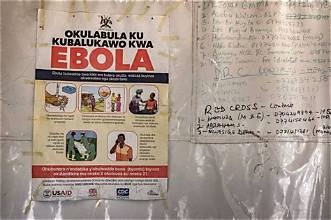
Uganda has clarified that as of Tuesday, October 21, 2026, when Nigerian health authorities confirmed an active case of Ebola in its capital city, Abuja, it had no active case of the virus.
Health Minister, Muhammad Ali, had announced that a female patient who had travelled from Uganda in East Africa, tested positive for the virus.
“The Federal Government of Nigeria confirms one case of Ebola disease in the Federal Capital Territory (FCT), following laboratory confirmation today, 20 October 2026. The patient, a woman who recently arrived in Nigeria on an international flight from Uganda, was admitted to a private hospital in the FCT, where she received care for several days before the diagnosis was confirmed. She is currently in isolation and receiving medical care.
“The FG calls on all public and private healthcare facilities nationwide to be on high alert. Healthcare workers must maintain a high index of suspicion, promptly identify and isolate suspected cases, observe strict infection prevention and control measures, and immediately report suspected cases to public health authorities.
“Investigations are ongoing, and we will continue to provide accurate and timely information,” Pate had said.
The development had made many Nigerians look towards the direction of Uganda, just like Patrick Sawyerr, a Liberian, imported the disease to Nigeria in 2014.
But in a statement issued after Pate’s comment, Charles Olaro, Director-General of Health Services in the East African country, clarified that the patient is a Nigerian.
Olaro said the woman had travelled to Eastern Democratic Republic of the Congo (DRC), which has over nearly 10,000 active cases with 4,500 deaths from Ebola, for business and transited through Uganda in early October.
According to Olaro, she showed no symptoms while in Uganda but developed symptoms after arriving in Nigeria.
“Travel through Uganda does not establish that infection occurred here. The location of exposure remains under investigation,” the ministry said.
“The Government of Nigeria is yet to provide detailed information on her travel itinerary and clinical history which will guide further investigations and any necessary contact tracing.
“We wish to clarify that, as at the time of this statement, Uganda has NO confirmed active Ebola cases.”
The Ugandan government said it had maintained limited provisions for humanitarian and diplomatic movement, adding that it would strengthen screening and public health controls at points of entry.
Symptoms, spread and what to avoid
Ebola is a severe viral disease that can cause high levels of mortality. The WHO says the average case fatality rate across Ebola disease outbreaks is approximately 50 per cent, although the rate varies substantially according to the virus, outbreak circumstances and access to care.
The virus is not airborne in the manner of infections that spread through ordinary breathing in shared indoor spaces.
According to the WHO, transmission between people occurs primarily through direct contact with the blood or other body fluids of an infected person who has developed symptoms, or someone who has died from the disease.
Infection can occur when contaminated fluids enter the body through broken skin or the eyes, nose or mouth.
Objects contaminated with infectious body fluids, including clothing, bedding and medical equipment, can also spread the virus.
People may also become infected through contact with infected animals, particularly when handling sick or dead wildlife or consuming inadequately handled products from infected animals.
Traditional burial practices involving direct contact with the body of someone who died from Ebola can contribute to transmission if appropriate precautions are not taken.
Healthcare workers and family members caring for patients without suitable protective measures can face a heightened risk.
The WHO says people infected with Ebola do not transmit the disease before symptoms develop. Once symptoms begin, they can remain infectious while the virus is present in their blood.
The incubation period — the time between infection and the appearance of symptoms — ranges from two to 21 days.
The health minister explained that Ebola spreads through direct contact with the blood or body fluids of someone who is sick with the disease or has died from it, or through contact with contaminated materials. Prof Pate noted that a person with Ebola cannot spread the disease before symptoms begin.



Leave a Reply