
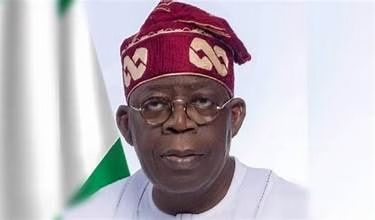
The Bola Tinubu Government has confirmed that it secured a fresh $1.25 billion financing package from the World Bank, weeks after Nigerians flooded the lender’s social media platforms with appeals and criticism over continued lending to the country.
Finance Minister and Coordinating Minister of the Economy, Taiwo Oyedele, disclosed the development during a media briefing on the Tinubu administration’s economic reform scorecard.
Oyedele said Nigerians had taken their concerns to the World Bank’s social media platforms, criticising the international financial institution for continuing to lend money to Nigeria despite the country’s growing debt burden.
“People went to the social media account of the World Bank to go and be abusing them that they’re giving Nigeria loan. World Bank just switch off the comments. We’ve gotten the loan because that’s not how the system works,” Oyedele said.
“People went to the World Bank social media to abuse them that they’re giving Nigeria loan. They just switched off the comments.. we’ve gotten the loan. People need to understand how things work.”
The comments restriction came in May 2026 amid reports that Nigeria was seeking the fresh facility.
Many Nigerians used the World Bank’s Instagram page to appeal to the lender to stop granting additional loans to the Federal Government, citing rising public debt, worsening living costs and concerns over the management of borrowed funds.
The World Bank subsequently restricted comments on some of its social media posts, triggering further criticism from Nigerians who demanded greater transparency and accountability over the country’s borrowing.
The World Bank later approved the $1.25 billion Nigeria Actions for Investment and Jobs Acceleration (NAIJA) Development Policy Financing operation in June 2026.
The facility forms part of the World Bank’s support for economic reforms in Nigeria, including measures aimed at expanding access to finance and digital services, improving electricity access, advancing power-sector reforms, increasing agricultural productivity and strengthening domestic revenue mobilisation.
The latest facility adds to a series of World Bank loans and financing arrangements secured by the Tinubu administration since 2023.
The fresh borrowing has, however, renewed concerns over Nigeria’s rising debt obligations and the government’s continued reliance on external financing to fund its programmes.
Nigeria’s total public debt stood at about ₦159 trillion, or approximately $94 billion, by the end of 2025, with the country’s obligations to multilateral lenders such as the World Bank increasing in recent years.

Leave a Reply