
By Steve Oko & Nnamdi Ojiego
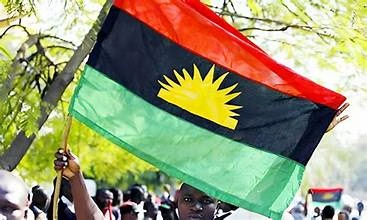
Fifty-nine years after the declaration of the sovereign state of Biafra, Igbo women, youths, monarchs and other stakeholders have reignited the conversation on the Biafra struggle, arguing that what they described as injustice against the Igbo nation remains largely unaddressed.
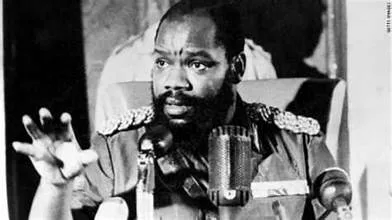
Following the killings of the Igbo across the country, especially in the North, in 1966, then Military Governor of defunct Eastern Region, Col Emeka Odumegwu-Ojukwu, declared the independence of the region on May 30, 1967.
The action was one of the immediate causes of the Nigeria Civil War otherwise known as the Biafra War.
Since the end of the war in 1970, it is generally believed that the Igbo have remained marginalized in the nation’s sociopolitical equation.
Atrocities
Reflecting on the Biafra question 59 years after, National President of Igbo Women Assembly (IWA), Lolo Nneka Chimezie, argued that clamping down on people trying to remember the atrocities that led to the Civil War would not bring any solution.
Chimezie argued that the conflict was avoidable and rooted in political betrayal, ethnic persecution and the refusal of Nigeria’s leadership at the time to embrace restructuring as proposed by late Biafran leader, Chukwuemeka Odumegwu Ojukwu.
“We engaged in a war that ought not to have been,” she said. “Ojukwu offered restructuring to save lives and preserve peace, but it was rejected. Today, the same restructuring they dismissed has become the loudest conversation in Nigeria.”
The IWA President painted a grim picture of a nation still battling the ghosts of the civil war, insisting that what she called Nigeria’s refusal to genuinely reconcile with the Igbo people has continued to fuel agitation across the South-East and parts of the South-South.
Related News
Insecurity: Yorubaland unsafe, terrorist cells spreading; I have solution – Gani Adams
Aburi Accord failed due to federal backtracking, not Ojukwu’s intransigence – Onoh replies Gowon
Civil War: How Awolowo saved Murtala; why I spared Ojukwu — Gowon
Igbo
According to her, policies allegedly targeted at suppressing the Igbo have not only deepened alienation but also stunted Nigeria’s growth and unity.
“59 years after the war, Nigeria is in a worse condition. In trying to crush the Igbo, the country ended up hurting itself,” she declared.
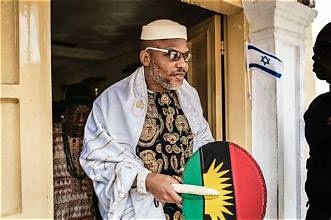
Chimezie traced the evolution of pro-Biafra agitation from the era of Ralph Uwazuruike and MASSOB to the rise of the Indigenous People of Biafra (IPOB) under Nnamdi Kanu, describing the movement as a reaction to “persistent exclusion, injustice and marginalisation.”
“The agitation has refused to die because the issues driving it have not been addressed,” she stated.
She accused the Federal Government of applying double standards in its handling of security and separatist concerns, arguing that while violent criminals and terrorists receive amnesty and rehabilitation, pro-Biafra agitators are met with force and repression.
“There is nothing they have not done to crush IPOB, yet the movement remains alive because the people feel unheard,” she said.
The IWA President revisited alleged atrocities committed during the civil war, including the starvation policy against Biafrans and the massacre of civilians in places like Asaba.
“Nigeria must confront its past. Millions died. Innocent people were slaughtered simply because they were Igbo,” she lamented. “There must be restitution, recognition and national atonement”, she added.
Drawing parallels with post-Holocaust Germany, she argued that healing could only come through acknowledgement, justice and remembrance.
She, therefore, called on government to officially recognise Biafra Remembrance Day observed every May 30, just as June 12 was institutionalised in honour of the late Moshood Kashimawo Olawale Abiola.
“If June 12 can be recognised nationally, why should the remembrance of millions who died during the civil war be treated like a crime?” she queried.
The IWA President further demanded the release of Nnamdi Kanu, insisting that dialogue rather than force remains the pathway to lasting peace.
“Instead of crushing Biafra agitators, government should engage them constructively and find out what they truly want,” she said.
She also urged Igbo people across the world to honour fallen Biafrans by observing the May 30 remembrance, lighting candles and reflecting on the sacrifices of those who died during the conflict.
Neglected
Beyond remembrance, Chimezie stressed the need for economic inclusion, youth empowerment and deliberate efforts to rebuild the South-East, which she described as one of the most peaceful but economically neglected regions in the country.
“All the Igbo youth are asking for is inclusion, equal opportunity and justice,” she maintained. “Nigeria must stop treating the South-East as a conquered territory and begin to treat the Igbo as equal stakeholders in the federation.”
Her remarks, though certain to provoke national debate, echo a growing sentiment among many Nigerians that the unresolved questions of equity, justice and true federalism remain central to the country’s fragile unity nearly six decades after the guns of the civil war fell silent.
Igbo youths
Corroborating the position earlier canvassed by the Igbo Women Assembly on the unresolved Biafra question, the Coalition of South East Youth Leaders (COSEYL) expressed anger that nearly six decades after the civil war, the grievances that triggered the conflict remain unresolved.
President-General of COSELY, Goodluck Ibem, said the continued agitation in the South-East was rooted in perceived injustice, political exclusion, economic neglect and the refusal of the Nigerian state to address demands for equity and true federalism.
“History cannot be erased or suppressed,” he said, arguing that the memories of the civil war persist because many Igbo still feel alienated within the Nigerian federation despite their contributions to national development.
He questioned why the South-East remains the only geopolitical zone with five states while others have six or more, and why calls for restructuring, fair representation and constitutional balance continue to be ignored.
According to COSEYL, national unity cannot endure where any section feels excluded or unfairly treated.
“Genuine unity is built on justice, fairness and mutual respect, not suppression or intimidation,” the group declared.
COSEYL also lamented poor infrastructure, insecurity, unemployment and what it described as weak federal presence in the South-East, insisting that Ndigbo are not asking for pity but equal opportunity, inclusion and fairness.
The group urged Igbo leaders to unite in pursuing a common agenda centered on restructuring, economic revitalisation, youth empowerment and political inclusion, while also calling on the Federal Government to embrace dialogue and reconciliation as pathways to lasting peace.
National unity
For COSEYL, May 30 remains a solemn reminder that unresolved injustice continues to threaten national unity, warning that Nigeria can only survive and prosper when every ethnic nationality is treated with dignity, fairness and equality.
Meanwhile, Enachioken Abriba calls for emotional detachment from Biafra, focus on building Igbo nation
Paramount traditional ruler of Abiriba ancient kingdom, HRM Eze Kalu Kalu IV (Enachioken Abriba), in his contribution, called for a strategic shift in the Biafra struggle, urging Ndigbo to move beyond emotional attachment to the name “Biafra” and concentrate on building a strong, united and economically viable Igbo nation.
Speaking on the Biafra project as Nigerians mark 59 years after the civil war, the monarch paid glowing tribute to fallen heroes and both past and present pro-Biafra leaders, including Ralph Uwazuruike, Nnamdi Kanu and Simon Ekpa, for sustaining what he described as the “light and hope” of the Igbo nation.
“I salute the courage of our young men and women all over the world keeping the Biafra spirit alive,” he declared., adding that “the Igbo nation cannot be wished away.”
The revered monarch, however, argued that after nearly six decades of agitation, it had become necessary for Ndigbo to redefine the conversation and place greater emphasis on the future of the Igbo people rather than merely the symbolism of Biafra.
“For too long, we have focused more on the name Biafra while relegating the main issue to the background. The main issue is the Igbo nation,” he stated.
According to him, the Igbo identity represents excellence, dignity, integrity, communal values and cultural pride, stressing that the survival and advancement of the Igbo race would require strategic leadership, economic integration and political consciousness rather than violence.
“We need a new generation of visionary leaders, not just politicians. We have capable Igbo sons and daughters all over the world who can drive the rebirth of the Igbo nation.”
Eze Kalu further urged Ndigbo to embrace political participation as a tool for advancing the Igbo cause, calling on eligible citizens to obtain their Permanent Voter Cards and actively influence leadership recruitment in Nigeria.
“Biafrans should go and get their voter cards to make a political statement,” he charged, insisting that future political appointments and endorsements in Igbo land should be based on candidates’ commitment to the collective Igbo agenda.
He warned against empowering politicians perceived as working against Igbo interests, saying the time had come for the South-East to deliberately pursue a long-term blueprint for political relevance, economic growth and cultural unity.
The position of Enachioken Abriba adds to growing voices across the South-East calling for a more strategic, coordinated and politically-driven approach to the Igbo question nearly 59 years after the civil war.
However, the Igbo political elite are generally perceived as the major obstacle to the agitation and struggle for Biafra restoration as they are being accused of placing their political and selfish interests above the struggle.
Some analysts believe that not until this class gets on board and genuinely buys into the project, the struggle may remain a mirage.
Speaking on whether the “Biafra question” had been answered, former President of Aka Ikenga, Goddy Uwazurike, and founder and Chairman, Board of Trustees of the All Progressives Grand Alliance, Chekwas Okorie, said successive governments had failed to address the root causes of the war.
Aburi Accord
Uwazurike said inequality, imbalance in the Nigerian system, and the failure to implement agreements reached before the war were central to the Biafra crisis.
According to him, the refusal of former Head of State, Yakubu Gowon, to implement the Aburi Accord contributed significantly to the outbreak of the civil war.
“Well, the Biafra issues have not been solved because we have leaders who would rather pretend without facing reality,” he said.
“It was the inequality, it was the imbalance in the system that led to Biafra, and the failure of Gowon to handle issues that were discussed in Aburi.”
Emotional date
Uwazurike described May 30 as a deeply emotional date for many Igbos, saying memories of the war and the humanitarian tragedy associated with it had not faded.
“As for May 30, it is in the mind and hearts of every Igbo person. We don’t forget easily and we can never forget,” he said.
He criticised attempts to downplay the suffering experienced during the war, especially the starvation that claimed the lives of many civilians, including children.
The former Aka Ikenga president also argued that Nigeria’s leadership structure still reflected the same imbalance that led to the war, insisting that federal character and fairness had not been fully implemented.
“The way forward is the election of credible leaders who will provide a level playing ground for everybody,” he added.
“In the government of Tinubu today, can you call it a balanced government? Certainly not.”
Unfulfilled promises
Also speaking, Okorie said the reconciliation promised after the war had largely remained unfulfilled despite official declarations of “no victor, no vanquished.”
He recalled accompanying late Biafran leader, Chukwuemeka Odumegwu Ojukwu, to a public event in Lagos where Ojukwu met Gowon years after the war.
According to him, when journalists asked whether the meeting symbolised reconciliation, Ojukwu replied that “the problem of Biafra could not be resolved with a single embrace of two old friends.”
Okorie said that response captured the unresolved grievances that persisted decades after the conflict.
Banking policy
He cited the post-war banking policy that limited many Igbo account holders to £20 regardless of their pre-war savings as evidence that reconciliation was never sincerely pursued.
“One would have thought that with the policy of no victor, no vanquished, such an obnoxious policy would never have been implemented,” he said.
He also accused the Federal Government of neglecting infrastructure and economic development in the South East after the war, particularly through the abandonment of seaports in the region.
According to him, the feeling of alienation among younger Igbos who did not witness the war contributed to renewed separatist agitation in recent years.
“That was what degenerated to demand for a resuscitation of the Biafran struggle,” he said.
Political participation
Despite his criticism, Okorie advised younger agitators to embrace political participation rather than violent confrontation, describing the Igbo problem as “essentially political.”
He urged Igbos across the country to become more active in the electoral process and political parties, arguing that their demographic spread across Nigeria gave them significant political influence if properly mobilised.
“Their relevance will return to them without having to fire any shot,” he said.
“Whoever will ever be president of Nigeria cannot ignore sitting with them to negotiate how power will be brought about and shared.”
He warned that political apathy among many young people in the South East was weakening the region’s bargaining power and called for a coordinated political agenda to restore Igbo relevance in national affairs.

Leave a Reply