
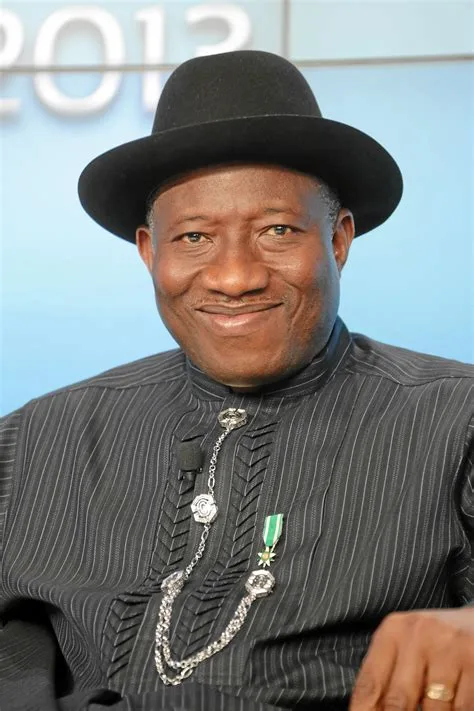
A political analyst in Kano, Kabiru Ojo, has said that former President, Goodluck Jonathan may not be a viable option for the northern political bloc ahead of the 2027 general elections.
He cited regional politics, power rotation concerns, and elite distrust as his reasons.
Ojo made the remarks in an exclusive interview with DAILY POST on Wednesday, where he analysed growing debate around Jonathan’s possible return, especially following reports that a faction of the Peoples Democratic Party (PDP) had declared him its preferred presidential candidate.
Recall that the Tanimu Turaki-led Interim National Working Committee of the PDP recently announced Jonathan as its sole presidential candidate for the 2027 elections after a screening process.
A member of the committee, former Niger State governor, Mu’azu Babangida Aliyu, had said Jonathan was granted a waiver due to his status as a former president.
However, Jonathan’s camp has dismissed the claim.
His Special Adviser, Jude Imagwe, said there was no confirmation that the former president had accepted any nomination or purchased forms.
“There is no suggested evidence that my boss has purchased or obtained any form,” Imagwe said.
“Some people said they granted him a waiver. I do not know anything about that. People are just trying to create ceremony around it.”
He added that Jonathan has not made any formal declaration.
“I find it difficult to say right now that my boss is contesting. It should not be announced for him. It is his decision to take,” he said.
But reacting to the wider political debate, analyst, Kabiru Ojo said the North would interpret Jonathan’s possible comeback differently depending on social and political class.
He explained that while ordinary Nigerians in the North may feel nostalgic about Jonathan’s tenure, elites would likely oppose his return.
“For the common man in the North who only thinks about survival, many will tell you they prefer Jonathan’s time over the present administration because there was no hunger then,” Ojo said.
“But the major challenge at that time was insecurity. Today, people are facing both hunger and insecurity. Can Jonathan handle and end the current full-blown insecurity if he returns?”
He added that the preference changes if a Northern candidate is available on the ballot.
“If there is a Northern candidate, the average Northerner will not support Jonathan coming back,” he said.
Ojo also said Northern political elites would resist Jonathan’s return due to fears of political retaliation linked to the 2015 election.
“The elites will not want Jonathan to come back because they will see it as a payback period. They believe he may remember how a coalition was formed against him and he was removed from office.”
The analyst further argued that some Northern stakeholders may attempt to draw Jonathan into the 2027 race for strategic reasons, especially within the PDP.
“If Jonathan comes in on the PDP platform, it may complicate Tinubu’s path and prevent a one-party situation,” he said.
He added that if multiple strong candidates emerge, including Peter Obi, Jonathan and others, it could split votes in a way that benefits different regional blocs.
On the issue of power rotation, Ojo said the principle is political rather than constitutional.
“Rotation is not written in the constitution. It is an arrangement for unity,” he said.
“Since 1999, the South has produced presidents for about 18 years, while the North has had about 10 years.”
He listed former presidents, Olusegun Obasanjo, Goodluck Jonathan, and Bola Tinubu as Southern leaders, while Umaru Musa Yar’Adua and Muhammadu Buhari represented the North.
Ojo argued that this imbalance influences current political debates on fairness and zoning, especially ahead of 2027.
He concluded that while Jonathan’s name continues to generate national attention, his chances of acceptance in Northern political circles remain limited.
“In reality, Jonathan is not a strong option for the Northern political bloc going into 2027,” he said.
Buhari, Tinubu performance has vindicated Jonathan – Rabiu
Another political analyst in Kano, Aminu Rabiu, has said that the performance of former President Muhammadu Buhari and President Bola Ahmed Tinubu has changed public perception of former President, Goodluck Jonathan.
He argued that Jonathan has now been vindicated by events after leaving office.
Rabiu also stated this in an exclusive interview with DAILY POST on Wednesday where he assessed Jonathan’s post-presidency political image and his acceptance, especially in Northern Nigeria.
He said Jonathan, who was once widely criticised during and shortly after his presidency, is now seen in a different light.
“Without fear of contradiction, I can say that former President Goodluck Jonathan’s post-presidency image has greatly improved,” he said.
According to him, Jonathan was previously viewed by many as ineffective in handling corruption and insecurity challenges, but that perception has changed over time.
“During and immediately after his presidency, Jonathan was perceived as corrupt and inept, especially in the context of corruption and insecurity,” Rabiu noted.
However, he argued that the situation under successive governments has reshaped how Nigerians now see Jonathan’s tenure.
He said the failure of other administrations to fully address insecurity and corruption has led many Nigerians, particularly in the North, to rethink Jonathan’s performance.
Rabiu added that Jonathan is now regarded as a true democrat who prioritised national unity after leaving office, especially through peace efforts and international democratic engagements.
He further said Jonathan’s involvement in election observation missions and peace mediation across Africa has strengthened his global reputation.
According to him, these roles have contributed significantly to his rehabilitation in public perception.
The analyst said that, in his view, Jonathan could still be a strong contender if given a solid political platform, particularly in a contest involving major national figures.
“If the contest could be Jonathan versus Tinubu, I believe the Northern electorate will go for the former,” he said.
However, Rabiu cautioned that Jonathan’s political chapter may be closed, noting that he has already served beyond a full presidential term.
“He, in fact, served for six years, first as Acting President from 2009 to 2010, and then as Executive President from 2010 to 2015,” he said.
He concluded by saying that while Jonathan’s image has improved significantly, he personally believes the former president should not return to contest for the presidency again, though he added that the law has the final say.
This comes as a suit before a Federal High Court in Abuja seeks to determine whether former President u Goodluck Jonathan is eligible to contest the 2027 election, following arguments that his succession in 2010 and subsequent 2011 victory amount to two constitutional terms. The court has fixed May 26 for judgment.

Leave a Reply