
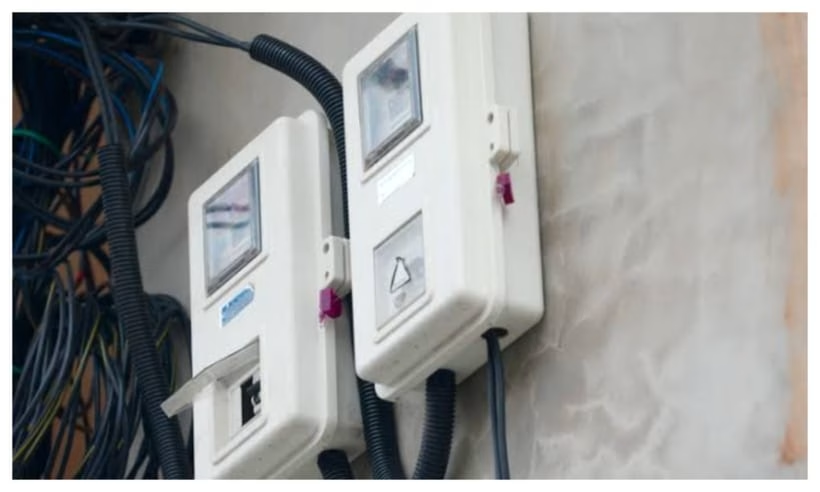
The Nigerian Electricity Regulatory Commission (NERC) has approved a N30 billion disbursement to electricity distribution companies (DisCos) for the procurement and installation of meters under the meter acquisition fund (MAF) tranche C scheme.
According to Order No NERC/2026/121, issued on Monday, the fund targets the provision of free meters to all remaining unmetered Band A customers and accelerating installations for Band B consumers.
The commission had approved N21 billion for the first tranche and N28 billion for the second tranche of the initiative.
In the order, NERC said the funding would be shared among the 11 electricity distribution companies (DisCos) in proportion to their respective contributions to the fund.
Since the introduction of reforms in the electricity sector under the President Bola Ahmed Tinubu administration, the federal government has granted approval for the procurement of N1.116trn worth of prepaid meters for distribution to consumers for free.
The reform, which saw the removal of electricity subsidy for Band A electricity customers, was meant to provide free meters for customers under the band, with extension to others in Band B, C, D and E.
But despite the approval and release of funds, the rollout of the meters has been slow.
Though the government maintains that the country has 12,747,789 electricity customers with 8,045,565 customers metered and 4,704,224 unmetered, many Nigerians still pay for their meters to stop alleged extortion by electricity Distribution Companies (DisCos) through estimated billing.
To reduce reliance on estimated billing and improve electricity-sector revenue collection, the government introduced new schemes worth N1.11trn from 2024 to date. The distribution has largely focused on Band A customers, whom the former Minister of Power, Adebayo Adelabu, said made up 15 percent of electricity consumers.
The schemes the government introduced include the Distribution Sector Recovery Program (DISREP), Meters Acquisition Fund (MAF) and Presidential Metering Initiative (PMI).
A breakdown of the money allocated to each scheme showed that DISREP allocated $250m (N337bn at N1348.10/dollar) for 3.2m meters, MAF got N79bn and PMI was allocated N700bn.
While the DISREP and MAF are ongoing, PMI will start next year, but the funds have been released to the agency spearheading it.
What the metering schemes entail
DISREP is a $500 million World Bank loan aimed at improving the financial and technical performance of DisCos. One of the major objectives of DISREP is to close the metering gap in the NESI by deploying 3.2 million smart meters.
Installation of meters under the DISREP commenced in May 2025. A report in October 2026, citing the World Bank’s implementation report, said only 731,034 had been installed by September, representing 22.8 per cent of the target.
PMI was approved in November 2023 to help address Nigeria’s persistent electricity metering challenges. It forms part of broader efforts to expand meter deployment, improve electricity-sector revenue collection and reduce reliance on estimated billing.
The programme is a N700bn backed budget from the federation account and according to the Presidency, the project also includes training of over 5,000 Nigerians in meter installation and strengthening the capacity of local meter manufacturers in line with the Nigerian First Policy, among others.
Also, the project is implemented by a federation-owned entity, PMI-Smart Grid Development Limited (PMI-SGDL), with the Chairman of the Nigeria Governors’ Forum and Governor of Kwara State, Mallam AbdulRahman AbdulRazaq, serving as its board chairman.
The Special Adviser on Energy to the President, Olu Verheijen, is the Executive Secretary, while Obafemi Solebo serves as the Project Director and Chief Executive Officer.
Already, the training of 5,000 meters installers began in July, and it is being done in batches, with the third batch at the completion stage.
According to documents from FAAC, PMI-SGDL received a first tranche of N120bn on May 13, 2024; a second tranche of N100bn was disbursed on June 10, followed by another N100bn on July 16.
Another N100bn was disbursed on August 16, September 16 and October 11, respectively while the last N80bn was disbursed on November 10, 2024.
The ledger termed the receiver as State House: Smart Grid Development Limited e-collection account.
Though the PMI is supposed to distribute 3.8 million meters, former minister Adelabu had stated that distribution would begin with 1.1 million meters by December 2025, while two million meters would be distributed annually over five years.
Two years after the complete disbursement of the fund by FAAC, distribution is yet to begin. But a factsheet by NERC said the distribution will start in 2027 with 750,000 meters to help close the metering gap.
The Nigerian Electricity Regulatory Commission (NERC) said it introduced the MAF in 2024 due to the inability of DisCos to raise financing in the form of debt or additional equity for meters.
It added that the fund serves as a credible revenue stream from the market funds on the back of which long-term financing may be secured by the utilities. Since its introduction, the scheme has approved N79bn for the purchase of meters done in three tranches of N21bn, N28bn and N30bn respectively. The implementation of the first and the second approvals has been completed.
Announcing the operationalisation of the third batch of N30 billion on Tuesday, NERC said it became effective on November 2, 2026.
It explained that the funding is intended to meter all remaining unmetered Band A customers and accelerate the metering of Band B customers, with equitable distribution across states within the respective DisCo franchise areas.
It said, “Under the Order, DisCos are required to undertake transparent procurement processes involving eligible Local Meter Manufacturers and Assemblers (LMMAs) and Meter Asset Providers (MAPs) with verified meter stock. The Commission has prescribed maximum procurement prices based on the median national MAP online bid prices from the September 2026 bid cycle. Payment to selected providers shall be made in two stages: 70% upon verified delivery of meter stock and the remaining 30% upon confirmation of complete installation.”
It stressed that all meters supplied and installed under the MAF programme would be provided free of charge to customers, adding that every meter must prominently display the relevant DisCo’s name, the applicable MAF tranche and the inscription “NOT FOR SALE”.
“Where a DisCo initiates the relocation of an existing customer’s connection point for revenue protection purposes, the cost shall be borne by the DisCo. The Order also provides sanctions where DisCo defaults impede meter installation.
“To ensure accountability and transparency, the Order prescribes monitoring, reporting and evaluation requirements for the Fund Manager, DisCos and participating meter providers. All supply and installation contracts must be filed with the Commission. All meter installations under Tranche C must be completed on or before 31 May 2027,” NERC said.
It urged all stakeholders to comply strictly with the provisions of the Order.
Nigerians pay N133.92bn for meters in 18 months
Meanwhile, Nigerians paid for 892,859 meters under the Meters Assets Providers (MAP) scheme between January 2025 and the second quarter of 2026, according to data from the quarterly reports by NERC.
This amounted to N133,928,850,000, as the scheme is structured for customers to pay DisCos for their meters, while they will be refunded in the future with electricity tokens.
The figure was arrived at using an average of N150,000 per meter. This is due to the varying price of meters, with three-phase meters costing over N200,000 while single-phase costs up to N120,000.
While there is no data on which bands those who bought meters with their money belong to, the rollout of MAF and DISREP was to prioritise Band A and B customers; it could be said that most of those who purchased meters under MAP belong to the lower bands of B (in part) to E.
‘Lack of transparency affecting meter distribution’
Speaking, Kunle Kola Olubiyo, President of the Nigeria Consumer Protection Network, blamed the slow pace in free meter distribution on lack of transparency and accountability from the federal government.
Olubiyo, however, said the schemes are the right step in the right direction in closing the metering gap, as the DisCos do not have the financial muscle to bridge the gap.
He said, “Nobody seems to be communicating. We are in a silent mode activated across all boards. So, there is a need to improve communication. The PMI team said they want to invite stakeholders to interrogate their data. Data interrogation is about good governance and accountability. Let us see what they have done. But, you know, this is being run in silos.
“We don’t have access to their KPI (key performance indicators). It is quite unfortunate. The government should simplify the deployment in some places for us to know the customer ratio per metric that has really been deployed. So, these are the issues we need to see. They need to upscale the level of openness and accountability about the entire system.”
Olubiyo said the government prioritised Band A users because they are considered prime customers.
“So if you have some customers in a given cluster, the typical businessman will try as much as possible to do 100% metering of customers and put in place mechanisms that will even make it difficult for energy theft. Look at the barracks. We used to run at low figures, but as we speak, the effective metering of the barracks has led to high revenue inflows,” he added.
On his part, energy expert Lanre Elatuyi said consumers would continue to face arbitrary billing, which might result in under-billing or overbilling.
He said once DisCos under-bill, it means they cannot collect for energy they have distributed and when they overbill, consumers will not pay because they will contest it and whatever they are given as their energy usage does not correspond to what they feel they used.
“So, as long as there are consumers that can’t pay up-front for the cost of metering, it is a challenge for the whole sector that is facing gross liquidity,” Elatuyi added.
He advised the federal government to engage the public on the status of the metering initiatives as the current situation seems opaque.
Also, Uket Obonga, a Nigerian consumer rights advocate and National Secretary of the Nigeria Electricity Consumers Advocacy Network (NECAN), said $250m was exclusively given to the federal government to procure 3.2 million meters.
He said, “Have they exhausted those metres? How many metres out of the 3.2 million have been procured? How many consumers have benefited? So, what are they talking about? Why should we still be giving out money that even these Discos are already giving?
“If you are talking of metering Band A customers, you recall that on the 4th of April 2024, when customers were disaggregated into Bands A, B and so forth, we were told that 15% of the feeders would be on Band A.
“Today, there is indiscriminate migration of customers. Even Band B, Band C and Band D customers have been moved by the DisCos indiscriminately to Band A.
What should be of paramount concern is what is the customer population in Band A? What is the metering percentage of Band A customers as of today and what is left?
“Recall that to qualify for Band A, either an area or a community or an estate, the metering level was put at 85%. We are aware that people below 50% were moved to Band A in the false claim that power supply has improved.”
Obonga said service-based tariffs under Band A imply that both quantity and quality are good enough to give customers 20 hours of electricity supply.
“How many Band A customers are actually receiving 20 hours of supply? So, these are the questions,” he added.
He said it is shameful that a lot of customers still rely on MAP to get their meters while the government continues to announce billions for DisCos to get meters.

Leave a Reply