
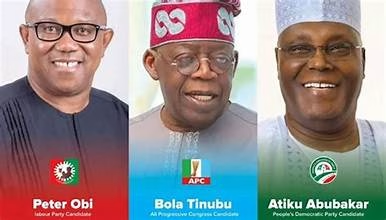
The race for Nigeria’s 2027 presidential election is gradually taking shape, with President Bola Ahmed Tinubu of the All Progressives Congress (APC), Atiku Abubakar of the African Democratic Congress (ADC), and Peter Obi of the Nigeria Democratic Congress (NDC) emerging as major contenders.
The North is expected to play a crucial role in determining the outcome because of its large voting population. In the 2023 presidential election, the Northwest recorded 22,255,562 registered voters, followed by the North-Central with 15,363,731 and the Northeast with 12,542,429.
Adamawa, Atiku’s home state, is expected to witness a fierce contest. Atiku secured 417,611 votes in 2023 against Tinubu’s 182,881. However, his defection from the Peoples Democratic Party (PDP) to ADC presents a challenge, while Tinubu’s position has reportedly strengthened following Governor Ahmadu Umaru Fintiri’s defection to APC.
Bauchi also remains competitive. Atiku defeated Tinubu in 2023 with 426,607 votes against 316,694. However, Governor Bala Mohammed’s reported move to the Allied Peoples Movement (APM) could reshape the political landscape. Tinubu may benefit from federal government interventions in security and other sectors.
In Benue, APC is considered well-positioned because of its political structures and the achievements claimed by Governor Hyacinth Alia’s administration in infrastructure, healthcare, education and workers’ welfare. Nevertheless, internal party disagreements could provide opportunities for opposition parties.
Kano presents another major challenge. Tinubu won 517,341 votes in 2023, while Rabiu Musa Kwankwaso secured 997,279 votes for the New Nigeria Peoples Party. Kwankwaso’s reported emergence as Obi’s running mate could make the state a significant battleground in 2027.
Meanwhile, APC is expected to retain considerable strength in Kwara and Niger states, where Tinubu performed strongly in the previous election. However, economic hardship and insecurity could influence voters’ decisions.
In Borno, APC maintains a strong political presence, while Yobe remains important to Atiku’s northern support base.
Ultimately, the outcome across these states will depend on party structures, political alliances, candidates’ popularity, security conditions and voters’ assessment of the economy and government performance ahead of the 2027 election.



Leave a Reply