
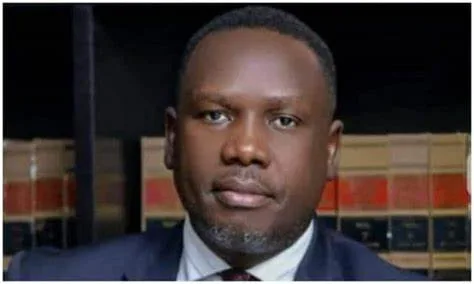
In the widely discussed interview, Mehdi Hasan relentlessly confronted Bwala (Tinubu’s Special Adviser on Policy Communication) with his own past statements including videos and quotes from when Bwala was a vocal critic of Tinubu (during his time supporting Atiku Abubakar and the PDP).
Bwala repeatedly denied or downplayed those earlier remarks, leading to Hasan presenting evidence clip after clip. The exchange exposed inconsistencies, with Bwala appearing evasive or caught in contradictions.
The interview went viral in Nigeria, sparking massive backlash against Bwala and the Tinubu administration for the perceived embarrassment on the global stage.
Hasan’s approach; calm, evidence-based, persistent, and unafraid to call out lies or failures drew widespread praise as exemplary journalism.
Why Rufai Oseni “Became the Standard”
The key reason Oseni is now hailed as a benchmark stems from direct comparisons:
-1). Similar Styles Validated: Hasan used the exact tactics Oseni is famous for—playing old clips, fact-checking in real-time, pressing on contradictions, and refusing to let guests dodge questions.
What was once labeled “rude” or “unprofessional” when Oseni did it (e.g., in his own heated exchanges with Bwala) suddenly looked like world-class journalism when done by an international figure like Hasan.
-2). Vindication Moment: Oseni himself declared he felt “vindicated.” In reactions on Arise TV and social media, he pointed out the hypocrisy: If he asks tough questions or confronts a guest with past statements (as he did with Bwala previously), he’s attacked as biased or aggressive.
But when Hasan does the same sometimes more condescendingly, Nigerians applaud it. He argued this proves his method is legitimate accountability journalism, not personal animosity.
-3). Public Sentiment Shift: Social media erupted with posts saying things like:
- “Mehdi Hasan roasting of Daniel Bwala has given us a better perspective of Rufai as a broadcaster who got the memo to unearth these fraudsters.”
. “Rufai Oseni is the standard for how journalism should be practiced.”
- “If you watched Mehdi drill Bwala, you’ll understand why voices like Rufai Oseni must be protected.”
- Comparisons settled debates (e.g., Rufai vs. more measured anchors like Seun Okinbaloye) in Oseni’s favor.
Even some who previously criticized Oseni acknowledged that his confrontational styleonce seen as “Nigerian media drama”—mirrors what global audiences respect in Hasan.
The Bigger Picture
This episode highlighted a double standard in Nigerian media discourse: Tough, evidence-driven questioning is celebrated internationally but often vilified locally when it targets those in power.
Bwala’s meltdown (and his subsequent complaints about Hasan’s “opposition-styled journalism”) only amplified the narrative that anchors like Oseni are necessary to hold officials accountable, especially when politicians flip-flop or deny their own records.
In short, Mehdi Hasan’s masterful takedown of Daniel Bwala didn’t just embarrass the guest; it retroactively elevated Rufai Oseni’s reputation. Many now see him not as an outlier, but as Nigeria’s version of the uncompromising, fact-checking journalist the country desperately needs.
“Medhi Hassan Journalistic Prowess and The Hypocrisy Back Home in Nigeria.”

Leave a Reply