 Premium News
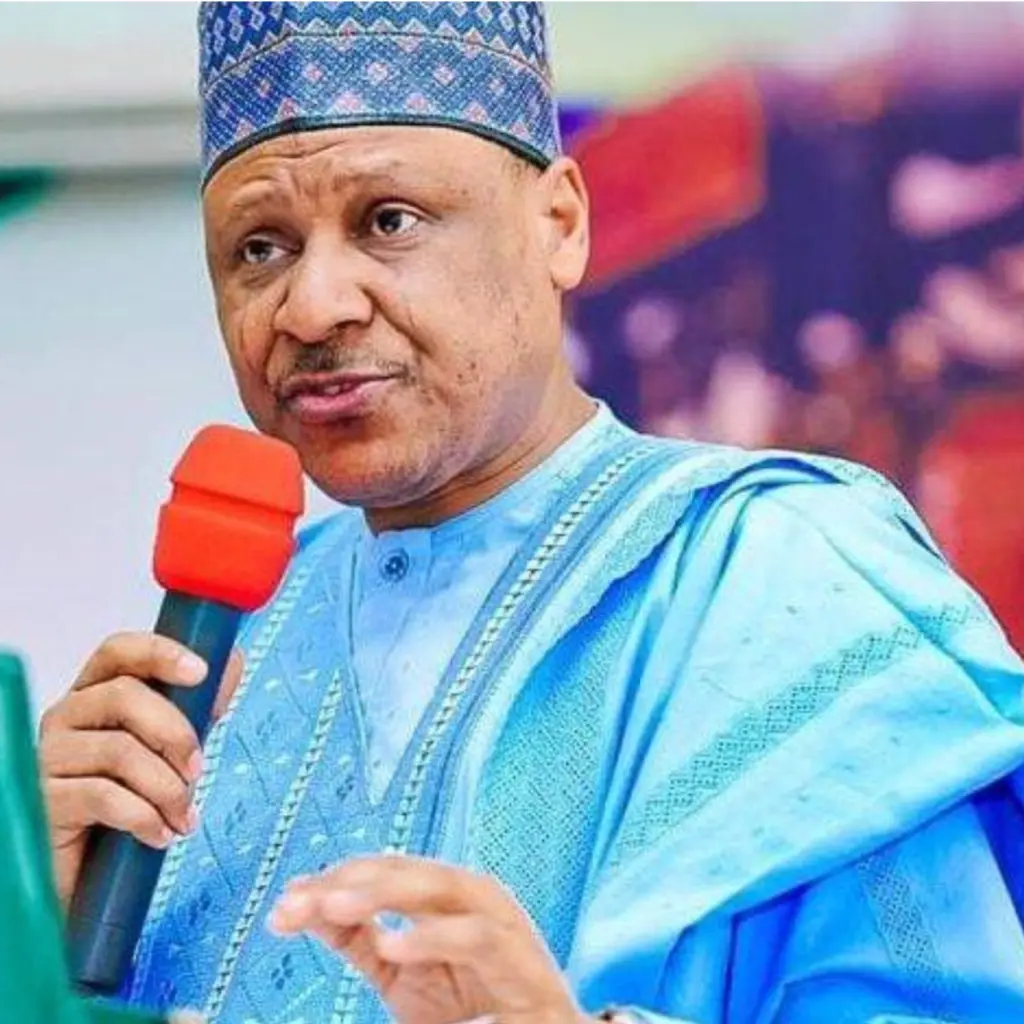
The Federal Government on Thursday reaffirmed its commitment to the creation of state police, declaring that Nigeria is ready for decentralised policing as soon as the necessary legal framework is in place.
The Minister of Information and National Orientation, Mohammed Idris, said on Thursday that President Bola Tinubu is determined to ensure the reform becomes a reality once enabling legislation is secured.
Speaking during a courtesy visit by the Centre for Crisis Communication, led by its Chairman, Maj Gen Chris Olukolade (retd.), at the ministry’s headquarters in Abuja, the minister said decentralised policing has become imperative in tackling Nigeria’s evolving security challenges.
This was contained in a statement issued by the Special Assistant (Media) to the minister, Rabiu Ibrahim.
“It is the desire of President Bola Tinubu to ensure that we have state police as soon as it is practicable in this country. The time has indeed come for that,” Idris said.
He disclosed that the President had already appealed to the National Assembly to enact the appropriate legislation to pave the way for the establishment of state police.
The minister noted that strengthening Nigeria’s internal security framework must go hand-in-hand with reinforcing national communication systems, especially in a digital era where information spreads rapidly and shapes public perception during crises.
“In today’s digital age, crises are no longer only defined by events, but also by how information spreads as fast as it does. Digital innovation is therefore central to timely, accurate and coordinated communication, especially during moments of national importance,” he said.
Idris welcomed proposals by the centre, including the establishment of a National Crisis Communication Hub and a Crisis Communication Performance Index, describing them as initiatives that align closely with the ministry’s mandate.
He assured the delegation that the ministry would carefully study the report of the November 2025 National Symposium on Digital Innovation and Crisis Communication and examine how its recommendations could complement ongoing Federal Government reforms.
He also stressed the responsible use of emerging technologies in communication.
The minister added that while artificial intelligence, social media and other digital tools were indispensable in modern communication, they must be deployed responsibly, honestly and patriotically, balancing freedom of expression with national interest and public trust.
Idris commended the centre for fostering inter-agency collaboration, research, training and media monitoring, including its monthly Strategic Communication Inter-Agency Policy Committee meetings conducted in partnership with the Office of the National Security Adviser.
Idris said the government could not work alone, adding that constructive engagement with credible civil society organisations and professional bodies was essential to strengthen Nigeria’s communication architecture.
Earlier, Olukolade thanked the minister for his support towards advancing crisis communication reforms in the country.
“Your gesture added so much weight and the necessary authority and integrity to a gathering that brought together spokespersons, technology experts, security personnel, scholars and media professionals from across the country,” Olukolade said.
He added that the symposium produced comprehensive and actionable recommendations aimed at modernising Nigeria’s crisis communication system through stronger infrastructure, enhanced capacity and inclusive governance.
Olukolade appealed for the minister’s endorsement of the proposed National Crisis Communication Hub and the performance index framework, which he described as critical to real-time monitoring, coordinated responses to misinformation and strengthening institutional accountability.
Those in attendance included the Permanent Secretary of the Federal Ministry of Information and National Orientation, Ogbodo Nnam; Director of Public Relations and Protocol, Suleiman Haruna; Special Assistant (Administration) to the Minister, Dr Sunday Baba; Rear Admiral Aminu Almu; Commodore Kabir Aliyu; Executive Secretary of the Centre for Crisis Communication, Alhaji Yushua’u Shuaib; and other senior officials.
Tinubu, during the breaking of fast with governors at the Presidential Villa, Abuja, on Monday, reiterated his firm commitment to establishing state police as a means of curbing incessant security threats in the country.
On Wednesday, the President again called on the leadership of the Senate to pursue constitutional amendments that would establish a legal framework for state police.
Lagos AG backs Tinubu’s push
The Lagos State Attorney-General and Commissioner for Justice, Lawal Pedro (SAN), has expressed strong support for President Bola Tinubu’s call for the establishment of state police, saying Nigeria’s centralised policing system can no longer contain the growing wave of insecurity.
In a statement on Thursday, Pedro endorsed the President’s proposal for a constitutional framework that would allow states willing and able to fund their own police forces.
Pedro argued that most of Nigeria’s security challenges were local crimes that required policing structures closer to the communities where they occurred.
“You will agree with me that the incidents that have increased the level of insecurity in Nigeria today, such as banditry, kidnapping, terrorism, human trafficking, ritual killings, cultism, herdsmen-farmer clashes, ethnic and communal conflicts, and armed robbery, are largely local crimes occurring in different communities,” he said.
He explained that these crimes persisted because the Nigerian Police Force, operating under a federal structure, was overstretched and unable to meet the country’s security demands.
“These local crimes have festered because of the inadequacy of the Nigerian Police Force to check them.
“A single federal police system cannot adequately respond to security needs across the 36 states, the Federal Capital Territory, and the various local government areas,” Pedro stated.
Highlighting historical precedence, Pedro recalled that state and regional policing existed during Nigeria’s First Republic.
“It will be recalled that during the First Republic, Nigeria operated regional and local police formations.
“Therefore, state policing is not alien to our country’s legal history,” he said.
Pedro addressed concerns that governors might misuse state police for political or personal interests but dismissed such fears as insufficient to reject the initiative.
“To the best of my knowledge, the major ground of opposition against state police is the fear or apprehension that state governors may abuse it for political or personal interests.
“This concern is genuine; however, it is not enough to justify rejection of state police in Nigeria today,” he said.
He stressed the need for constitutional safeguards to prevent abuse while ensuring effective policing.
“What we need to do is to put in place a constitutional framework and safeguards that address these concerns. I believe that was the recent advice or request of President Tinubu to the National Assembly,” Pedro added.
On structure and operations, Pedro proposed a unified federal and state police system and suggested moving policing from the Exclusive Legislative List to the Concurrent Legislative List through constitutional amendment.
“By constitutional amendment, the issue of police can be moved from the Exclusive Legislative List to the Concurrent Legislative List, thereby giving power to state governments to establish state police with guidelines set out by the National Assembly,” he said.
He added that such guidelines should cover “recruitment, promotion, discipline, structure, operational control, and welfare of police personnel across the country.”
Pedro also called for a clear demarcation of functions and jurisdiction between federal and state police to ensure harmony.
“I believe that if this is achieved, the insecurity in the country will be reduced to the nearest minimum,” he said.
Among other recommendations, he proposed re-establishing the Nigeria Police Council and State Police Service Commissions to set national standards for recruitment, appointment, promotion, and discipline.
He also suggested that states recruit officers based on capacity, while governors appoint state commissioners of police on the recommendation of the State Police Service Commission and approval of the state House of Assembly.
Pedro concluded that with proper legal and institutional safeguards, state policing could strengthen Nigeria’s security architecture and bring policing closer to communities.
