 Premium News
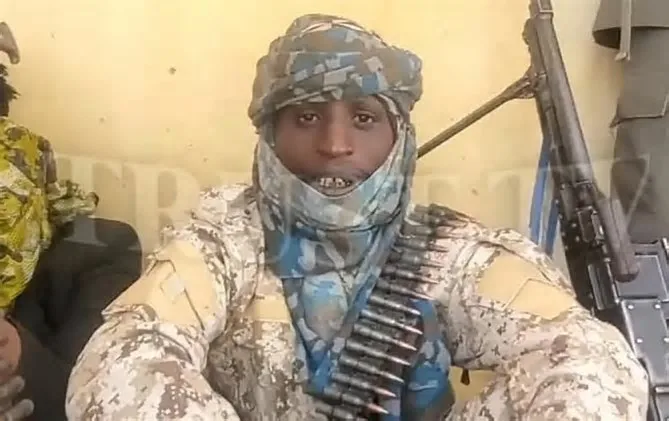
An American Christian missionary, Alex Barbir, has alleged that Fulani militias are behind a wave of killings across parts of Nigeria, accusing the Federal Government of failing to act and attempting to suppress what he described as a “targeted campaign” against Christians.
Barbir, who recently visited Nigeria, made the claims while addressing concerns over insecurity in several states in an interview with US-based news outlet, CBN News
According to him, “The Fulani terrorists are massacring Christians across Nigeria, they are taking over land, the Nigerian government are doing nothing about it.”
He further dismissed suggestions that Boko Haram insurgents were primarily responsible for the violence in certain regions, insisting instead that armed Fulani groups were to blame.
“In Benue, it’s not Boko Haram, in Plateau it’s not Boko Haram, in Taraba it’s not primarily Boko Haram, in Kaduna, it’s not Boko Haram, it’s Fulani that are going about killing, massacring,” he said.
The missionary also accused the government of shielding perpetrators and downplaying reports of attacks on Christian communities
“We need to deal with them, the government is not doing anything, they are basically covering them up. They are paying billions to lobby, saying there is no Christian genocide,” Barbir alleged.
Questioning what he described as a culture of silence, he added, “Why are we hiding the truth, who is going to be the one to say the truth, fight for the people and life of Nigerians, if it’s just me, I will do it.”
He called on Christians to be more vocal, stating, “We need more people, we can’t be Christians and stay on the sidelines.”
Barbir’s comments come amid previous reports in which he accused the Benue State Government of attempting to frustrate his plans to rebuild Yelwata village, which was attacked by bandits.
He was quoted as saying he wanted to construct a market for the people of Yelwata, but the government rejected the proposal and instead sent him a market blueprint valued at ₦300 million. He insists the project can be completed for no more than ₦60 million.
Barbir also claimed that there’s no market in any Nigerian village that is worth N300m, alleging that certain individuals were exploiting the suffering of Benue indigenes affected by bandit attacks for personal gain.
Neither the Federal Government nor the Benue State Government had publicly responded to his latest allegations as of the time of filing this report.
Earlier, SaharaReporters reported that US lawmakers introduced new legislation aimed at increasing accountability for human rights abuses in Nigeria, including potential sanctions against Fulani militias and former Kano State Governor Rabiu Kwankwaso.
“Today, I am proud to introduce the Nigeria Religious Freedom and Accountability Act of 2026 with Rep. Chris Smith,” US Representative Riley Moore stated. Moore, a Republican, emphasized the US commitment to global religious freedom, adding, “The U.S. is a Christian nation. As such, we must stand with persecuted Christians around the world.”
According to Moore, the proposed legislation seeks to strengthen the impact of previous US actions in Nigeria. “Our legislation will build upon the momentum of President Trump designating Nigeria as a Country of Particular Concern and the recent US-Nigeria security framework agreement,” he said, referencing past measures targeting religious persecution and security cooperation.
Legal experts and advocates have highlighted the bill’s focus on accountability for specific actors involved in religiously motivated violence. Sean Nelson, Senior Counsel for Global Religious Freedom, praised the bipartisan effort, noting, “Powerhouse team of Rep. Chris Smith & Rep Riley Moore today introduced a new bill on religious freedom in Nigeria increasing accountability measures, incl recs for sanctions against Fulani militias and former Kano State gov Kwankwaso, who intro’d Sharia criminal law there.”
The legislation comes amid growing international attention on the rise of sectarian violence in Nigeria.
The bill specifically recommends sanctions against armed groups accused of perpetrating violence and government figures who have enacted or supported laws that critics say infringe on religious freedoms.
Observers note that the bill signals a stronger US willingness to tie security and economic cooperation with human rights benchmarks. By linking sanctions directly to accountability for abuses, the proposed law could influence how Nigeria addresses religiously motivated attacks in the future.
The Nigeria Religious Freedom and Accountability Act of 2026 is expected to undergo committee review in the US House of Representatives, with supporters urging quick consideration given the urgency of ongoing religious freedom concerns.
Earlier, SaharaReporters reported that the United States would deploy 200 troops to Nigeria to provide training and technical support to the country’s armed forces, with both governments stressing that the personnel will not participate in direct combat operations.
The deployment, confirmed on Tuesday by Nigerian and US officials, marks an expansion of military cooperation between Washington and Abuja as Nigeria continues its fight against insurgent and terror groups.
“We are getting US troops to assist in training and technical support,” Major General Samaila Uba, spokesperson for Nigeria’s Defence Headquarters, told AFP.
