
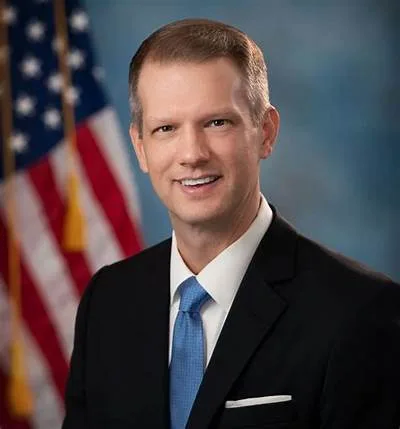
The Indigenous People of Biafra (IPOB) has faulted comments attributed to United States Congressman, Rep. Riley Moore, on Nigeria, religious persecution and self-determination, describing them as based on flawed assumptions and a misreading of history.
In a statement titled “A Response to Rep. Riley Moore on Nigeria, Religious Persecution, and Self-Determination,”
IPOB’s spokesperson, Comrade Emma Powerful, argued that preserving Nigeria’s territorial integrity has not translated into safety for Christians, particularly in the North, the Middle Belt and parts of the South-West.
According to IPOB, Nigeria’s more than six decades of unity under what it described as a “British-designed central structure” have coincided with recurring attacks on Christians, including killings, mass displacement, church burnings and a culture of impunity allegedly enabled by the state.
Powerful said the crisis facing Nigeria is not a lack of international security cooperation but a “structural failure” rooted in what he called a forced union of incompatible religious and civilizational systems.
Reacting to claims that self-determination could embolden terrorism, IPOB dismissed the argument as misleading, insisting that terrorism thrives in environments where identities are suppressed and autonomy denied, rather than where oppressed groups seek peaceful self-rule.
He cited Afghanistan as an example, arguing that decades of foreign military support and cooperation failed to prevent the resurgence of extremist ideology once the underlying political structure collapsed.
Drawing from history, IPOB maintained that separation has often provided safety for persecuted religious minorities. The group referenced the experience of the Huguenots, who found refuge in Protestant England, as well as the State of Israel, which it described as a sovereign haven for persecuted Jews.
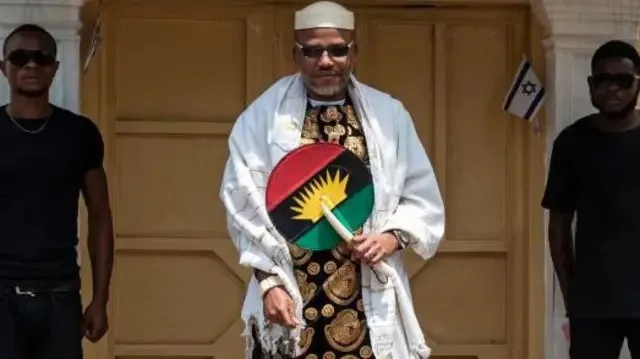
Powerful stressed that the agitation led by IPOB leader, Mazi Nnamdi Kanu, is not a call to violence but a demand for a democratic referendum, which he described as a peaceful and internationally recognised means of conflict resolution.
According to him, a restored Biafra would serve as a “safe civilisational anchor” where Christians and people of other faiths could live without fear, adding that such a state could also provide refuge for persecuted Christians from other parts of Nigeria.
He further claimed that since the emergence of IPOB, mass killings of Igbos in parts of Northern Nigeria have significantly reduced, attributing the development to what he described as collective self-assertion and deterrence.
While acknowledging the importance of international cooperation in combating violent extremism, IPOB argued that such efforts merely manage symptoms and do not address the root causes of Nigeria’s insecurity.
The group warned that rejecting peaceful constitutional exits while insisting on the permanence of what it called a “demonstrably broken state” would only prolong persecution and instability.
Powerful concluded that an independent Biafra would not threaten regional stability but rather enhance it, insisting that true peace, safety and dignity have historically followed self-rule, not forced unity.


Leave a Reply