 Premium News
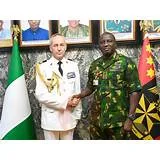
Details have unfurled on the scope of Nigeria’s military partnership with the United States, following increased collaboration between both countries in the wake of President Donald Trump’s re-designation of the West African nation as a country of particular concern (CPC).
Trump made the decision last October in response to allegations of a Christian genocide in the country, despite repeated rebuttals from the Nigerian government.
The following month, the US president threatened to send troops into Nigeria “guns-a-blazing” to wipe out the terrorists killing Christians.
The warning, which was largely perceived as a proposed violation of international law and state sovereignty, prompted President Bola Tinubu to dispatch a high-level team, led by Nuhu Ribadu, national security adviser (NSA), to meet Pete Hegseth, US defence secretary.
After the meeting, Hegseth said his department was “working aggressively” with Nigeria to end the alleged persecution of Christians by jihadist terrorists.
Hegseth offered no details on the nature of the engagement.
DEMAND FOR A DRONE REFUEL STATION
Days after Ribadu’s meeting with Hegseth, the US began conducting intelligence-gathering flights over swathes of Nigerian territory.
Flight tracking data and current and former US officials said the contractor-operated aircraft used for the surveillance typically took off from Ghana and flew over Nigeria before returning to Accra, the Ghanaian capital.
At the time, it was unclear what information the flights were intended to obtain.
On Christmas Day, the US launched missile strikes on two terrorist enclaves in Bauni forest in Tangaza LGA, Sokoto state.
Nigeria’s ministry of foreign affairs said the “precision hits” stemmed from the exchange of intelligence and strategic coordination between both countries, and was in line with “established international practice and bilateral understanding”.
It was widely reported that the strike involved more than a dozen Tomahawk cruise missiles fired off a navy ship in the Gulf of Guinea.
But officials familiar with the details of the operation told TheCable that the strikes involved drones.
Advanced drones can fire precision shots using mounted weapons like rifles, missiles, or guided munitions, achieving high accuracy in tests and operations.
They are also capable of malfunctioning and depositing debris across distances.
Communities in Sokoto and Kwara states had reported explosions at the same time the US launched a fusillade of air strikes on ISIS terrorists.
The federal government later confirmed that the explosions in Kwara were caused by debris from the precision-guided munitions (PGMs) fired by the US.
Top officials from Nigeria, including the NSA, and the US, such as Allison Hooker, under-secretary of state, have since engaged in bilateral working group meetings.
An official familiar with the conversations between both countries told TheCable that the US had demanded to have a station in Nigeria where they can refuel their drones after trips from Accra.
Drones can be refuelled in multiple ways, depending on their design and fuel type, extending their operational range beyond battery or fuel limits.
Most consumer and commercial drones (battery-powered or fuel-based) are routinely recharged or refuelled on the ground at stations.
