
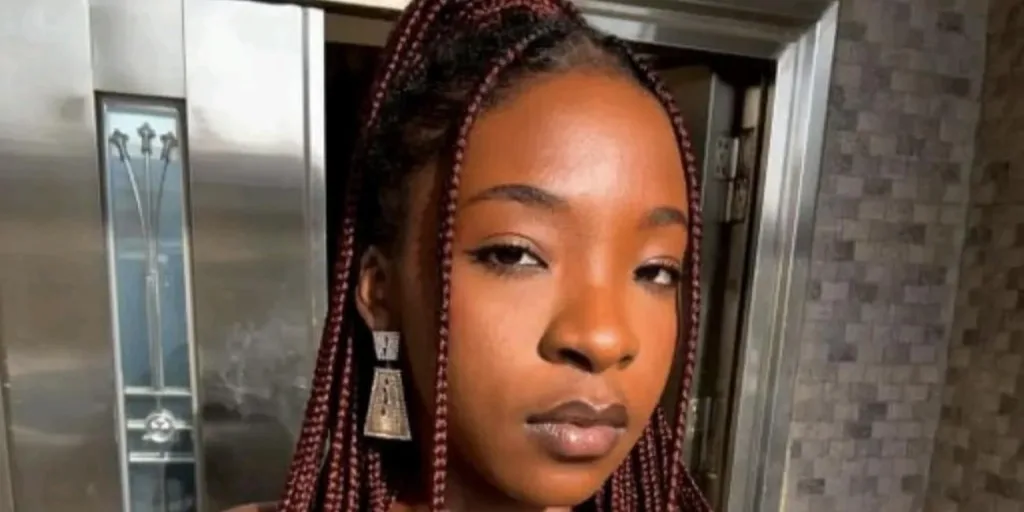
Following the death of Ifunanya Nwangene, who died on Saturday due to a snake bite, Nigerians have taken to the country’s social media space to express frustration over the failure of health institutions to save the life of the aspiring singer.
A Student from Nigeria Discovered a Way to Treat Joints at Home in 14 Days
A Student from Nigeria Discovered a Way to Treat Joints at Home in 14 Days
Volmix | SponsoredTry Now
According to netizens, Nwangene’s death could have been prevented if the hospitals she was rushed to had antivenom in stock.
The 26-year-old, who used TikTok to further project her talent after appearing on The Voice Nigeria in 2021, was bitten by a snake at her residence in Abuja, the Federal Capital Territory.
Reports indicate that the rising music star was rushed to two hospitals before giving up the ghost due to the inability of the facilities to administer antivenom.
Describing the situation as pathetic, netizens said Nwangene’s case gained attention because of her popularity on social media, stressing that similar situations occur in most Nigerian hospitals.
A popular netizen, Aproko Doctor, stated: “What if I tell you it is the system that killed her? Snakes bite people everywhere, whether you are in the bush or the city, in India, Australia, or other countries.
“Snakes bite people everywhere, but they do not die like this. They do not die just because they went to two hospitals and were told straight to their faces that antivenom was unavailable in a country where snakes live, in 2026, not 1980 or 1970.
“And when you think about it, Nigeria has a particular antivenom developed for Nigerian snakes. It is called ‘Echitab’. The question is: why was this antivenom not in the fridges of the hospitals she went to? Simply because we have forgotten the basics.
“Our politicians are building flyovers where ambulances do not exist. We are focusing on building ultramodern hospitals, whereas the primary healthcare centre, which should be the first point of call in any functioning country, is neglected.”
On his part, human rights activist and lawyer, Dele Farotimi, said: “The University College Hospital, Ibadan, was the preferred hospital for the Saudi royal family in the late 1950s and 1960s. It was that good. But in 2026 Nigeria, lives are being lost because our hospitals lack basic antivenoms, while our doctors are all abroad.”
An animal and nature enthusiast, popularly known as Arojinle, stressed that: “UCH is among the top three medical facilities in Nigeria, yet it does not have antivenom. The same applies to Adeoyo State Hospital, the top state hospital in Ibadan. That is the situation in the country.
“I know of someone who needed antivenom at one time. They went to 12 pharmacies but could not get it until they visited the 13th pharmacy.”
REACTION BY THE FEDERAL MEDICAL CENTRE ABUJA
CLARIFICATION ON RECENT EVENTS REGARDING THE CASE OF LATE IFUNANYA LUCY NWANGENE
We wish to address the circulating discussion on social media concerning the unfortunate case of Ms. Ifunanya Lucy Nwagene, who tragically passed away due to neurotoxic complications following a snake bite on January 31, 2026.
First and foremost, we express our deepest condolences to the Nwagene family during this incredibly difficult time. The loss of a loved one is never easy, and our thoughts are with them.
We want to clarify that the management team at Federal Medical Centre, Abuja acted promptly and with the utmost care upon Ms. Nwagene’s arrival. Our medical staff provided immediate and appropriate treatment, including resuscitation efforts, intravenous fluids, intranasal oxygen, and the administration of polyvalent snake antivenom.
After a thorough but quick evaluation, it was clear that Ms. Nwagene suffered severe neurotoxic complications from the snake bite. Despite all efforts to stabilize her condition and transfer her to the Intensive Care Unit for further treatment, she experienced a sudden deterioration just before the transfer. Our team of professionals worked diligently to provide CPR and other life-saving measures; however, despite these efforts, we were unable to revive her.
We stand by the quality of care and dedication our team demonstrates daily. The claims of non-availability of anti-snake venom and inadequate response are unfounded and do not reflect the reality of the situation. We are committed to transparency and integrity in our practices and will continue to pursue excellence in patient care.
In light of these events, we encourage our community to engage with credible sources for information and updates rather than relying on social media speculation. We remain available for any further inquiries or clarifications.
Thank you for your understanding.
DR. BIOKU MUFTAU,
HEAD OF CLINICAL SERVICES
FEDERAL MEDICAL CENTRE, ABUJA
1st February 2026.




Leave a Reply