 Premium News
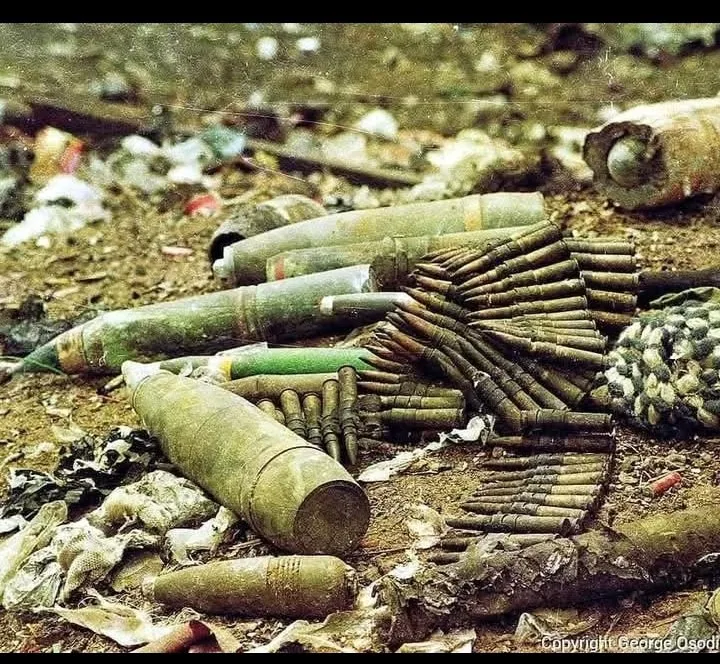
On Sunday, January 27, 2002, Lagos, Nigeria’s bustling commercial city was shaken to its core by one of the deadliest peacetime tragedies in the nation’s history.
It began like an ordinary day. Families returned from church, traders closed their stalls, and children played in the streets. But by evening, a fire broke out in a street market near the Ikeja Military Cantonment. At first, residents thought it was just another neighborhood fire. Few could have imagined that the flames were about to ignite the army’s main ammunition depot.
At about 6:00 p.m., the unimaginable happened. The fire reached the armoury. A thunderous explosion ripped through the city, followed by a chain of secondary blasts that lit up the Lagos night sky. Shockwaves shattered windows up to 15 kilometers away, roofs collapsed, and grenades and shells rained across neighborhoods. To terrified residents, it felt like the city was under attack. Many thought war had broken out, others whispered about a coup.
Panic swept through Lagos. Thousands fled in every direction, clutching children and meagre belongings. But in the chaos, tragedy struck. In the Oke Afa and Ejigbo areas, fleeing crowds poured toward a canal, its surface deceptively covered with thick mats of water hyacinth. In the darkness, no one realized the danger until it was too late. One after another, men, women, and children stumbled into the canal. In the stampede that followed, hundreds drowned. Mothers carrying babies, children running barefoot, entire families were swallowed by the waters. Survivors later recalled hearing cries fade into silence beneath the weeds.
By dawn, the devastation was clear. Streets were deserted, homes were abandoned, and the scale of human loss was staggering. Official figures put the death toll at more than 1,000 lives, with about 5,000 injured and at least 20,000 displaced. Independent observers believe the casualties may have been even higher. Mass burials were carried out for the unidentified victims, and today the Oke Afa Memorial Arcade stands as a solemn reminder of that night.
Governor Bola Ahmed Tinubu addressed Lagosians in a broadcast on NTA that night, urging calm and announcing emergency shelters at places like the Ikeja Police College. The Red Cross, NEMA, and religious organizations mobilized quickly, opening schools and churches as makeshift camps for survivors. Brigadier-General George Emdin, commander of the 9th Mechanized Brigade, offered a rare military apology, admitting that the blasts were accidental, the result of fire spreading into the depot. (https://www.facebook.com/share/v/16y3GN5HMG/)
The next day, President Olusegun Obasanjo flew to Lagos, declared the cantonment a disaster zone, and promised reforms. But many asked why warnings had been ignored. Just a year earlier, in 2001, a smaller explosion at the same cantonment had raised alarms about the dangers of storing massive quantities of live ammunition in a densely populated city. Residents had protested and demanded relocation of the depot, but nothing was done. Negligence turned a preventable hazard into catastrophe.
International news agencies like the BBC and CNN broadcast images of Lagos in flames, drawing global attention. For days, journalists reported finding unexploded shells, grenades, and shrapnel scattered in residential neighborhoods. Many survivors, left homeless and traumatized, campaigned for years demanding compensation. Some were given token payments, but countless others never received justice.
For Lagosians who lived through that night, the memory remains raw. “I thought the war had started,” one survivor later told reporters. Another mother described losing two children in the Oke Afa canal: “We ran together, but they slipped into the water. I never saw them again.”
The Ikeja bomb blast was not just an accident. It was a failure of responsibility, a lesson written in fire and blood. Every January 27, families of the dead gather at Oke Afa Memorial Arcade to honor loved ones lost. For many, the scars remain fresh, even two decades later.
The night Lagos bled is a reminder that negligence carries a human cost, and that history must never be forgotten.
