 Premium News
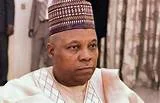
How does a sitting Vice-President become invisible in his own party?
Who keeps removing his image from official programmes—and why does nobody correct it?
At what point does silence become policy, omission become intention, and coincidence become design?
And if power has already moved on, why does the Vice-President remain, smiling beside a door that is quietly being shut?
These are not idle questions. They go to the heart of power, democracy, and institutional dignity in Nigeria today.
What began as murmurs has hardened into a pattern: repeated APC programmes—national, zonal, and stakeholder meetings—centred on President Bola Tinubu increasingly carry no image of the Vice-President. Not once. Not twice. Repeatedly. In different regions. Over time. Without correction. Without apology. Without explanation.
In Nigerian politics, visuals are not decorations. They are declarations. Posters, banners, backdrops, and stage designs are deliberate acts of messaging. They tell insiders who matters, who is protected, who is ascendant—and who is expendable. When a party consistently erases the face of its elected deputy from official imagery, it is making a statement louder than any press release.
The North-East saw it first, and loudly. At APC events in the region, banners bearing the President’s image omitted the Vice-President’s. Protests followed. State legislators complained. Party members raised alarms. Yet the national party did nothing. No redesigns. No rebukes. No insistence on balance. Silence settled like a verdict.
Then it happened elsewhere. In the South-East, similar omissions occurred at stakeholders’ meetings. There was less noise—no surprise there. The Vice-President is not from the South-East; local actors did not feel personally slighted. Media attention drifted. But the fact remained: the omission travelled. It replicated. It endured.
Most damning of all, APC national programmes built squarely around Tinubu’s presidency now routinely exclude the Vice-President altogether. The pattern has become systemic.
At this point, insisting it is accidental strains credulity.
Supporters of Kashim Shettima respond with a familiar refrain: he is the undisputed leader of the APC in the North-East. The claim is repeated often, loudly, and defensively. But repetition is not reality. Power in the North-East APC is fragmented—shared among sitting governors who control party machinery, former governors with entrenched networks, national party officials, and presidential loyalists who answer directly to Aso Rock, not the Vice-President.
A truly uncontested regional leader does not watch his image disappear from party banners in his own zone. He does not rely on state legislators to protest on his behalf while the party hierarchy looks away. He does not need explanations offered after the fact by spokesmen scrambling to justify the unjustifiable.
This is where rhetoric collapses under optics.
What is unfolding is best described as systematic marginalisation—deliberate sidelining carried out not through open confrontation, but through quiet erasure. It is institutional, not emotional. Calculated, not chaotic. And it goes far beyond Shettima as a person.
The Vice-Presidency is a constitutional office. It is elected. It is part of a joint mandate sold to voters as a package of balance, inclusion, and shared responsibility. When a ruling party treats that office as optional—when it visually airbrushes it out of relevance—it insults the institution itself.
This is not merely disrespect. It is abuse of office—not by the Vice-President, but against the office he occupies.
The man and the Snake
Worse still, it is an abuse of democratic principles. Democracy is not sustained by ballots alone; it survives on institutional respect. When power is personalised to the point where elected offices can be downgraded without explanation, democracy tilts toward one-man rule optics. Institutions weaken. Precedents rot. Today the Vice-President is erased; tomorrow, governors, legislators, or voters themselves may be quietly written out.
One would expect the guardians of institutions to push back. Instead, many have become cheerleaders to power. Those who should defend the Vice-Presidency now rationalise its erosion. Silence is framed as strategy. Compliance as wisdom. Applause replaces principle.
i
