 Premium News
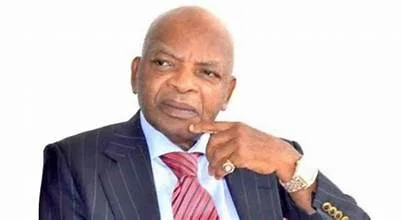
Senegal has withdrawn the Cayar Offshore Shallow exploration licence previously held by Atlas Oranto Petroleum, the privately owned oil and gas company linked to Nigerian billionaire Arthur Eze, ending a permit that dates back to 2008.
The offshore block about 3,600 square kilometres north of the Dakar peninsula, had long been viewed as oil-prone.
But Senegal says the acreage remained largely stagnant: no wells were drilled, and work on the licence fell short of what was expected over the years.
What Senegal says went wrong
Senegal’s core argument is straightforward: financial and contractual obligations were not met, and exploration activity stayed too thin for too long.
According to an industry-facing statement summarising the government’s position, the Ministry of Energy and Petroleum had issued formal notices requesting sufficient financial guarantees to enable the contractual work programme.
Senegal says those guarantees were not provided within the required timeframe, creating grounds, under its petroleum laws and contractual framework, to withdraw the licence and revert the block to the state.
Separate reporting around the revocation points to the same compliance issues: repeated failure to provide required bank guarantees, plus minimal exploration work despite extensions granted over the years.
In plain terms, Senegal is signalling that holding acreage is not enough. The government wants proof of capacity, money in place, work programme executed, timelines respected.
Why the timing matters
Although the withdrawal was formalised in September 2025 under the supervision of Energy Minister Birame Soulèye Diop, the details have gained wider attention in January 2026 as Senegal intensifies oversight of legacy licences.
The broader political context is also important. Senegal has framed the move as part of a tougher approach to petroleum governance under President Bassirou Diomaye Faye’s administration, raising the bar for who holds strategic upstream rights and under what conditions.
The bigger message: no more “speculative” licence holding
Senegal is not the only African jurisdiction reassessing old exploration arrangements that produced little activity. Across the continent, regulators are increasingly intolerant of “dormant” licences, blocks held for years without the investment needed to convert potential into drilling, discoveries, and production.
That logic is explicit in how Senegal has explained this decision: petroleum rights must translate into real investment, not long-term optionality.
For Senegal, reacquiring the Cayar Offshore Shallow block creates optionality for the state, not the licence holder, allowing authorities to reassess the acreage and decide whether to re-license it under stricter terms or fold it into future licensing initiatives.
What this means for Atlas Oranto’s regional posture
The Senegal decision is also drawing attention to Atlas Oranto’s wider West African footprint, where regulators are taking different approaches depending on their priorities and risk tolerance.
In Liberia, for example, the country’s petroleum authorities moved in the opposite direction in 2025, signing four production-sharing contracts with Atlas/Oranto covering offshore blocks including LB-15, LB-16, LB-22 and LB-24, with announced signature bonuses and substantial investment projections aimed at restarting a sector that had seen limited activity for years.
That contrast matters. It suggests a regional reality: governments will still do deals, but patience is shrinking, and enforcement is returning as a central theme.
The same company can be welcomed in one market and sanctioned in another, depending on execution history, compliance posture, and the host government’s urgency to monetise resources.
A sharper era of upstream enforcement
For investors and operators, Senegal’s action sends a clear signal about how the next phase of African upstream governance will work:
Senegal is emphasising contractual discipline, especially around bank guarantees, financial capacity, and credible work programmes.
This is consistent with a broader continental push to re-price risk, reduce non-performing acreage, and accelerate development. Nigeria’s current strategy in its own licensing efforts shows the other side of the same coin, using policy changes to attract bidders while still tightening process rules.
In Nigeria’s 2025 licensing round, the regulator announced a reduction of signature bonuses to a $3 million–$7 million range to lower entry barriers and stimulate new investment.
Different tactics, same end goal: get serious capital into the ground, not paper promises on the shelf.
