 Premium News
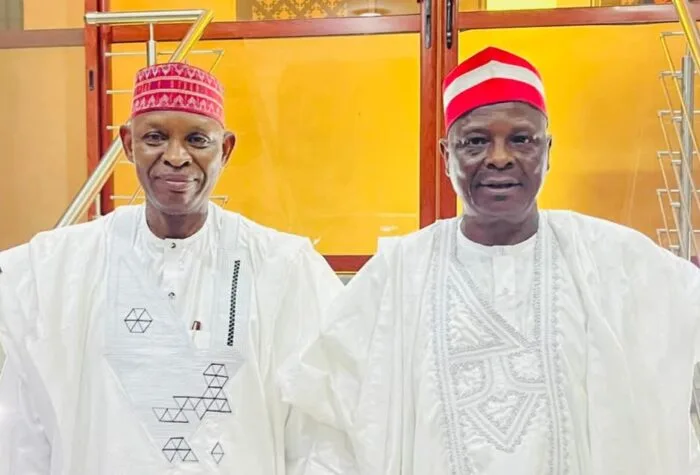
The age-long and popular phrase in Kano’s political lexicon, “Siyasar Kano sai Kano”, which literally translates to mean that Kano politics is unique to Kano, or more dramatically, that it can only be properly understood, practised and decoded by Kano people, has once again been thrust into national consciousness.
The dynamic, fluid and often unpredictable nature of politics in Nigeria’s second most populous state has once again dominated political discourse across the country. With alignments shifting rapidly, sworn enemies becoming potential allies and political benefactors drifting apart, the oft-repeated saying appears to offer the only reasonable explanation for developments that would otherwise seem politically illogical.
Or how else can it be explained that Governor Abba Kabir Yusuf, who is currently pursuing several corruption-related charges against his immediate predecessor, Abdullahi Umar Ganduje, is reportedly finalising preparations for a political alliance with the same man he repeatedly accused, even only a few days ago, of being responsible for virtually all the missteps and alleged failures of governance in Kano State?
More striking still is that this emerging alliance is unfolding alongside moves by Governor Yusuf to cut the political umbilical cord binding him to Senator Rabiu Musa Kwankwaso, his political benefactor of several decades and Ganduje’s most sworn political enemy.
Budget: FG abandons N7bn agric ministry building, sinks N11bn on new site
Intra-party war awaits Gov Yusuf – APC chieftain
If Kano’s politics were not best left to Kano politicians themselves, how does one explain the prospect of Ganduje, Deputy Senate President Barau Jibrin, former Deputy Governor Nasir Yusuf Gawuna and Governor Yusuf, all with strong personal ambitions and competing political histories, cohabiting within the same political family, expected to tolerate one another, produce a consensus governorship candidate and present a common front to deliver Kano for President Bola Ahmed Tinubu’s re-election bid in 2027?
These questions, along with the critical issue of what next for Kwankwaso, are the permutations thrown up by Governor Yusuf’s possible defection from the New Nigeria People’s Party (NNPP) to the All Progressives Congress (APC).
It is an already complex political equation, driven by the Presidency’s sustained efforts to woo Kwankwaso and his Kwankwasiyya Movement into the APC fold; the party that also houses Ganduje, became even more complicated when it became apparent that Governor Yusuf had resolved to make the switch without the backing or consent of his political mentor. This decision, according to sources familiar with the development, has strained the relationship spanning over 40 years between the two men.
Tinubu’s planned approach to winning Kano
Multiple reliable sources confirmed to Weekend Trust that the Presidency deliberately abandoned its initial aggressive pursuit of Kwankwaso after concluding that Kano could be won without necessarily committing to what insiders described as the “excessive” political demands of the Kwankwasiyya leader.
According to these sources, the Presidency was persuaded that Kwankwaso’s bargaining power had declined significantly, especially following the gradual defections of some of his most influential lieutenants to the APC.
The political calculation presented to the president, it was gathered, was rooted firmly in electoral arithmetic. During the 2023 governorship election, the NNPP, with Yusuf as Kwankwaso’s candidate and backed by the likes of Senator Kawu Sumaila, Reps Alhassan Ado Rurum, Abdulmumin Jibrin Kofa and Sagir Koki, polled 1,019,602 votes, representing 51.55 per cent of total votes cast.
The APC candidate, Nasir Gawuna, with the backing of Ganduje and other party stalwarts, secured 890,705 votes, representing 45.03 per cent.
Presidential strategists argued that with Sumaila, Rurum, Kofa and Koki already back in the APC with their political structures largely intact, securing Governor Yusuf, who controls the state’s executive apparatus and a substantial segment of the Kwankwasiyya grassroots machinery, would decisively tilt the balance in favour of the APC for the 2027 polls.
They also cited the outcome of the 2023 presidential election as a further justification. Kwankwaso, as the NNPP’s presidential candidate, secured 997,279 votes in Kano, amounting to 59.55 per cent of the total votes cast. Despite losing the state, President Tinubu still polled 517,341 votes, representing 30.88 per cent, his second-highest vote tally nationwide.
“The president was convinced that breaking Governor Yusuf away from Kwankwaso would be to his advantage,” a high-ranking source told Weekend Trust on condition of anonymity. “It removes the need to remain beholden to Kwankwaso or concede too much ground politically.
“The mathematics supports this strategy, although how voters will ultimately respond remains unpredictable,” the source said.
The source added that strategists believe that Kwankwaso, having already lost key mobilisers such as Kawu Sumaila and Abdulmumin Jibrin Kofa, has become significantly weakened.
“They also know that Kwankwaso stands almost zero chance of clinching the presidential ticket of any serious party. That is why they are already working on how a reported alliance between him and Peter Obi would fail again. But even if such an alliance succeeds, Governor Yusuf remains the joker in the equation,” the source added.
Beyond insider accounts, Dr Aminu Hayatu, a political analyst and academic based in Kano, told Weekend Trust that President Tinubu operates as a “master strategist” whose political instinct is to weaken opposition forces by absorbing them into the centre.
According to Hayatu, weakening Kwankwaso rather than yielding to his demands represents a more pragmatic and sustainable political option for the president.
He explained that the core of the strategy lies in stripping Kwankwaso of his operational machinery: commissioners, local government chairmen, lawmakers and other office holders who will traditionally move with the governor.
“Once these structures follow Governor Yusuf into the APC, Kwankwaso is left with personality and symbolism alone,” Hayatu said. “Without executive power, his influence becomes harder to translate into electoral victory.”
Hayatu further described Kano as one of Nigeria’s four “decider states”, alongside Lagos, Rivers and Kaduna, arguing that neutralising a kingmaker in such a state fits neatly into Tinubu’s established political playbook.
By pulling Governor Yusuf into the APC, he said, the president effectively dismantles the NNPP’s only executive stronghold in the country.
Suleiman Dambatta, a former close associate of Kwankwaso, echoed this view. He said those behind the strategy believe Governor Yusuf controls the “apparatus of government”, and that in Kano politics, whoever controls state machinery enjoys a decisive advantage.
Dambatta also argued that the move is designed to deliver a “terminal blow” to the Kwankwasiyya Movement by inducing an internal split.
“Even if the masses remain emotionally loyal to the red cap, the absence of a sitting governor makes campaigning in 2027 financially and administratively uphill,” he said.
Verdicts on key actors in the unfolding realignment
Despite the inherent unpredictability of Kano politics, the unfolding realignment broadly divides key actors into two camps.
Group A comprises the emerging APC family: Abdullahi Umar Ganduje, Governor Abba Kabir Yusuf, Deputy Senate President Barau Jibrin, Nasir Yusuf Gawuna, Rep. Abubakar Kabir Bichi, Senators Kabiru Gaya and Kawu Sumaila, and Murtala Sule Garo.
Group B consists of the Kwankwasiyya Movement, and whatever political platform it ultimately adopts, the key figures include Kwankwaso, Kano Deputy Governor Aminu Abdussalam Gwarzo, Senator Rufai Hanga and others.
Group A
Ganduje: The two-term former governor is widely regarded as the current leader of the APC in Kano. The circumstances surrounding his exit as national chairman of the party initially suggested a period of political retreat, particularly amid rumours that President Tinubu was considering him for an ambassadorial posting.
However, Hayatu argued that Ganduje is far from being a passive observer. He described him as a “very cunning strategist” whose political relevance has been significantly revived by Governor Yusuf’s possible defection.
By reportedly being tasked by the APC national leadership to receive and integrate Governor Yusuf, Ganduje has been repositioned as the party’s gatekeeper in Kano.
Analysts believe Ganduje may attempt to use Yusuf’s defection, particularly his status as Kwankwaso’s closest political ally, to launch a final assault on the Kwankwasiyya legacy.
If Ganduje retains access to the president, his immediate task might be to convince Tinubu that victory in Kano is only possible through his team and preferred candidates. However, this will depend heavily on the outcome of the party’s congresses and national convention expected in the first quarter of the year.
Many observers believe Governor Yusuf’s counter-strategy would be to upstage Ganduje by building his own party structure from the ward to the state level.
Dambatta cautioned that Ganduje remains a polarising figure within Kano politics, noting that his perceived strength is largely sustained by federal patronage rather than organic grassroots popularity — a factor that could trigger silent rebellion within the APC.
Governor Yusuf: Analysts see Governor Yusuf as the “joker” in the unfolding realignment. His most immediate challenge is persuading Kano voters that he is not the betrayer that Kwankwaso and the Kwankwasiyya Movement may want to portray him.
However, his greater challenge may lie within the APC itself.
ad
Bashir Ishaq Bashir, an APC chieftain, told Weekend Trust that Yusuf must brace for fierce intra-party battles.
“Having spent the past three years as the mouthpiece of Kwankwaso’s criticism of Ganduje and the APC, he should expect resistance,” Bashir said.
According to him, Yusuf’s political survival rests on two possible scenarios: either Ganduje and his allies genuinely forgive past hostilities or President Tinubu uses executive authority to ensure Yusuf secures the APC governorship ticket and is protected from internal sabotage in 2027.
Hayatu warned that while Yusuf may be welcomed publicly, he is being “lured into a trap.”
“He lacks the internal might to confront entrenched APC veterans like Ganduje or Barau Jibrin,” he said.
Dambatta, however, argued that Yusuf’s control of the “apparatus of government” gives him significant short-term leverage, especially if he moves with the 44 local government chairmen and the State Assembly.
ad
Ultimately, Yusuf’s second-term prospects depend on his willingness to “play ball” with the Ganduje-led structure or the durability of his deal with Tinubu. Any attempt to assert excessive independence, Bashir warned, could invite sabotage.
Barau Jibrin: Already viewed as the aspirant to beat for the APC governorship ticket, Barau’s political fate now hinges more on presidential calculations than financial muscle.
If Tinubu prioritises Governor Yusuf for stability, Barau might be prevailed upon to step aside, with guarantees of a return to the Senate and retention of his current leadership position — a scenario still considered a strategic win, positioning him for a 2031 governorship run.
Gawuna, Garo, Sumaila, Gaya, others: Other actors face divergent prospects. Gawuna is widely tipped for a senatorial ticket for Kano Central, while Garo is reportedly being prepared as a potential running mate should Yusuf secure the APC ticket.
Insiders also revealed that Ganduje might propose Abubakar Kabir Bichi, the chairman of the House Committee on Appropriation, as a governorship candidate if zoning favours his area.
The fiercest contest is expected in Kano South where Senator Kabiru Gaya seeks a return after losing to Kawu Sumaila in 2023. With arguments that the zone has been marginalised in governorship selection, both men are believed to harbour ambitions beyond the Senate.
Group B
Kwankwaso remains both the beginning and the end of the Kwankwasiyya Movement, and the unfolding realignment represents the greatest test of his influence in Kano politics.
Observers describe the situation as a zero-sum game. Victory could rejuvenate his presidential ambition, while defeat could amount to political extinction.
Hayatu said Kwankwaso’s foot soldiers are drifting with Governor Yusuf, potentially leaving him a “general without an army.”
Senator Masud El-Jibril Doguwa, a factional NNPP chairman, likened Kwankwaso’s predicament to that of past Kano leaders who confronted the centre and lost, warning that remaining in opposition could relegate him to a localised figure.
ad
However, Hon. Saddam Sani Umar, the Kwankwasiyya welfare officer, dismissed that assessment, insisting that grassroots loyalty to the “Jagora” remains intact and more potent than state patronage.
Speculation persists about an alliance with Peter Obi, which could elevate Kwankwaso nationally. However, his recent comments suggest that he has not ruled out joining the APC if conditions are right.
Dambatta argued that the governor’s defection might represent a terminal blow to Kwankwaso’s kingmaker status.
Senator Rufai Hanga: Observers believe that the Kano Central senator may be an early casualty unless Kwankwaso reasserts control. His Kano Central seat, the NNPP’s last senatorial foothold in the state, is already being eyed in APC calculations.
Kwankwasiyya Movement: Despite its visible presence across Kano, the Kwankwasiyya Movement is thought to be steadily losing structural power. The emerging divide between pro-Yusuf and pro-Kwankwaso factions is being seen as its deepest crisis since 2011.
With the governor expected to move with commissioners, lawmakers, local government chairmen and councillors, Kwankwaso’s loyalists may be left with only the movement’s organic base.
Umar, however, insists that the movement is undergoing purification.
“The soul of Kwankwasiyya resides with the masses who wear the red cap, not with politicians who remove it when it suits them,” he said.
In the final analysis, the “Kano Mathematics” favoured by the Presidency and the APC leadership will be tested against the “Kano populism” championed by Kwankwaso. If the Presidency successfully consolidates the APC giants under one roof, the Kwankwasiyya Movement might find itself on the brink of extinction. But in Kano, as the saying goes, the only thing certain is the uncertainty.
