 Premium News
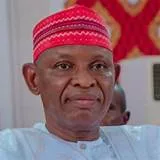
As with many godfather-godson relationships in Nigeria’s political history, Kano State Governor Abba Kabir Yusuf appears to have fallen out with his political mentor, Senator Rabiu Musa Kwankwaso.
In what has become a dramatic week in Kano politics, a relationship spanning more than four decades, dating back to their years as civil engineers at the Water Resources and Engineering Construction Agency (WRECA) in the 1980s, has come under severe strain, as personal ambition and political survival test a bond further cemented by marital ties between both families.
Until recently, Yusuf was regarded as one of the closest members of Kwankwaso’s inner circle. Popularly known as “Abba PA”, a reference to his long years as Kwankwaso’s personal assistant, Yusuf’s loyalty to his mentor spanned over 40 years, from bureaucratic service to partisan politics, eventually making him an in-law of the former governor.
When Kwankwaso resigned from WRECA to join politics, Yusuf followed. During Kwankwaso’s first tenure as governor between 1999 and 2003, Yusuf served as his personal assistant and continued in that role when Kwankwaso became Minister of Defence during the administration of former President Olusegun Obasanjo. Upon Kwankwaso’s return as governor in 2011, Yusuf was appointed Principal Private Secretary and later Commissioner for Works, one of the most influential portfolios in the state government.
What Abba is trying to do worse than what Rimi did to Aminu Kano – Senator Hanga
Rift traceable to ‘Abba Tsaya da kafar ka’ movement – Analyst
After Kwankwaso left office in 2015, Yusuf remained his private secretary before being handpicked as the Kwankwasiyya Movement’s governorship candidate in 2019; an election he narrowly lost. In 2023, again with Kwankwaso’s backing, Yusuf emerged governor.
Multiple sources close to the duo told Weekend Trust that the falling-out caught many by surprise and that political battle lines have now been drawn, suggesting that unless a major compromise is reached, both leaders may soon be openly critical of each other.
At the centre of the crisis, sources said, is a familiar dynamic in godfather politics: the godfather’s expectation of unquestioned loyalty, rooted in the belief that the godson’s political rise and survival are owed entirely to him, and the godson’s growing insistence on autonomy, driven by a conviction that he has come of age politically.
Kwankwaso and Yusuf 3
At convocation of the the Northwest University, Kano, where Senator Rabiu Musa Kwankwaso was conferred with an Honorary Doctor of Education degree on July 26, 2025
The rift burst into the open this week when several aides to the governor confirmed his plans to defect from the New Nigeria Peoples Party (NNPP) to the ruling All Progressives Congress (APC). The move, however, reportedly did not receive Kwankwaso’s blessing, with the former governor said to have complained that he was not given convincing reasons for such a switch.
The development immediately threw the Kwankwasiyya Movement, led by Kwankwaso, into confusion.
Reports last night said that Governor Yusuf would formally defect to the APC on Monday.
Sources told Weekend Trust that Yusuf’s decision is “irreversible”, even if it leads to a complete rupture with Kwankwaso.
The looming defection has reopened old rivalries in Kano politics, revived questions about the volatility of godfather–godson relationships and reshaped political calculations ahead of the 2027 general elections.
Observers have drawn parallels with crises in Rivers and Benue States since 2023. In Rivers, the feud between Governor Siminalayi Fubara and his estranged political godfather, the Minister of the Federal Capital Territory, Nyesom Wike, culminated in a declaration of a state of emergency and the suspension of the governor and other elected officials for six months. In Benue, Governor Hyacinth Alia’s standoff with his political benefactor and Secretary to the Government of the Federation, Senator George Akume, has defied reconciliation efforts, split the APC into factions and triggered clashes among supporters.
In Kano, the emerging rift has come as a shock to many because of the tightly knit Kwankwasiyya Movement that swept Yusuf to power. Political analysts, however, said it was only a matter of time, arguing that with competing ambitions at stake, a rupture was inevitable.
Insiders said Yusuf resolved to move to the APC, with or without Kwankwaso’s blessing, after extensive consultations with key stakeholders, including members of the Kano State House of Assembly, local government chairmen and federal lawmakers from the state.
A senior aide to the governor, who spoke on condition of anonymity, said the decision was largely driven by internal crises within the NNPP which, he said, could jeopardise Yusuf’s chances of securing a second term.
“The major reason is that the NNPP is no longer a viable platform because of the numerous litigations against it,” the source said. “Even if the governor stays, Kwankwaso’s inner circle has decided he will not get the ticket. Their plan is to give the deputy governor the chance.”
The source further alleged that resistance to Yusuf’s re-election was rooted in fears that his growing profile and visible projects across the state could eclipse Kwankwaso’s political legacy.
“They don’t want him to outshine Kwankwaso. His work is visible, and they don’t want him to continue,” he said.
Efforts to get a response from Sanusi Bature, the governor’s spokesperson, were unsuccessful. Calls and messages sent to his mobile telephone line over five days were not returned. He has also not commented publicly on the issue and was last seen aligning with the Dawakin Tofa Local Government chairman’s call for Yusuf and Kwankwaso to join the APC last weekend.
ad
Attempts to reach the Commissioner for Information, Comrade Ibrahim Abdullahi Waiya, also proved unsuccessful. He had asked one of our correspondents to forward questions, promising to respond via WhatsApp voice note, but had not done so as of the time of filing this report and did not answer subsequent calls.
‘Feud political, not personal’
Sources close to both Governor Yusuf and Senator Kwankwaso said the feud is essentially political rather than personal, insisting it is driven largely by the political survival instincts of both leaders.
“The main issue is that Kwankwaso became disappointed with Governor Yusuf because the level of loyalty he expected is no longer there. He felt he was not enjoying the loyalty he used to,” one of the sources said.
According to the source, Kwankwaso disappointment stemmed from the growing independence Yusuf began to assert in governance.
“He thought he would still be treating files and giving approvals. He more or less appointed all the commissioners and heads of agencies at the beginning of the administration, and this influence continued until recently. Even in the appointment of the new anti-corruption boss, the governor wanted to retain Muhuyi, but Kwankwaso opposed it and brought in the current one,” the source, who is familiar with the developments and close to both leaders, said.
A senior NNPP official in Kano, however, offered a less conspiratorial explanation, arguing that the tension reflects differences in leadership style rather than personal animosity.
“There are differences in style and priorities, not necessarily personal animosity,” the official told Weekend Trust, speaking on condition of anonymity. “Kwankwaso believes in strong party discipline and loyalty to the movement’s ideology, while the governor is under pressure to manage government, appease diverse interests and deliver dividends of democracy. That naturally creates friction.”
Despite this public framing, insiders said the divergence in approach soon translated into hard political calculations.
One of the sources said it was largely for this reason that the former governor allegedly mapped out two political scenarios.
“One option was to allow the NNPP to lose power, hence the zero effort to resolve the internal crisis that split the party into two factions.
“The second, which we learnt had already been activated, was to remove the governor and replace him with his deputy, Comrade Aminu Abdussalam Gwarzo,” he said.
But efforts to get the reaction of Comrade Gwarzo as to whether he was aware of the unfolding plans were not successful.
His Press Secretary, Ibrahim Garba Shuaibu, could not also be reached as of press time.
ad
According to the source, the plan to install Gwarzo involved two possible routes.
“The first was to allow Yusuf to complete his tenure but deny him the ticket for a second term, replacing him with Gwarzo on the ballot since Kwankwaso controls the party structure in Kano and at the national level,” he said.
“The second option was that if Yusuf defected from the NNPP, Kwankwaso would deploy the state assembly, where he believed he controlled 27 members—the exact constitutional number required for impeachment. The assumption was that the governor, being politically inexperienced, would not be able to retain the loyalty of any lawmaker.”
Those calculations reportedly changed once Yusuf’s defection plans became public.
“That was when Kwankwaso realised that the loyalty of most assembly members had shifted to the governor,” the source said.
He said Kwankwaso initially convened a meeting of assembly stakeholders to prepare for Yusuf’s impeachment. After learning of the planned defection to the APC, he also summoned a meeting of local government chairmen, attended by 27 out of the 44.
“He told them that Governor Yusuf was about to disappoint him and asked them to be ready to disown the governor,” the source said.
Kano Polics
National leader of the New Nigeria People’s Party (NNPP), Rabiu Musa Kwankwaso (right) congratulating the Abba Kabir Yusuf on elections victory at Miller Road, Kano State on 20th March, 2023
On the same day, Kwankwaso reportedly invited 27 members of the state assembly to another meeting. About 20 lawmakers, including the speaker, deputy speaker and majority leader, attended.
“All 20 of them told him they were with the governor and intended to defect with him to the APC,” the source said. “With the 20 lawmakers aligned with Yusuf and the 13 APC members, the governor effectively has the support of 33 legislators, making impeachment impossible.”
From Yusuf’s camp, sources said the counter-strategy now being considered is to deploy the same bloc of lawmakers to impeach the deputy governor after the defection since Gwarzo has reportedly aligned with Kwankwaso and ruled out joining the move to the APC.
One source said it was therefore not surprising that a day after the crisis erupted, the deputy governor travelled to Saudi Arabia for the lesser hajj.
“His trip is strategic,” the source said, adding that allies of the governor are describing the journey as a spiritual effort to shield him from the political fallout of the crisis.
However, some insiders said that the deputy governor is neutral, adding that he holds both Governor Yusuf and Kwankwaso in high esteem.
Weekend Trust reports that as part of the New Year celebration, the deputy governor had extended felicitations to the two warring parties, a move sources said was deliberate in order to show his “indifferent posture” for now.
In the message signed by his spokesman Shuaibu, Gwarzo expressed gratitude to Almighty Allah for the gift of life and the opportunity to witness another year of peace and progress.
He applauded Governor Abba Kabir Yusuf for his visionary leadership, commitment to the welfare of citizens, and continued efforts to restore the pride and dignity of Kano State through people-oriented policies and developmental projects.
He equally lauded Senator Kwankwaso for his enduring mentorship, political wisdom and fatherly guidance, which have continued to inspire a new generation of leaders devoted to public service and national development.
The deputy governor reaffirmed the commitment of the present administration to deepening good governance, strengthening grassroots development, and ensuring equitable growth across all sectors in the state.
He called on the people of Kano to remain steadfast, law-abiding, and supportive of the government’s ongoing initiatives aimed at transforming the state.
Comrade Gwarzo prayed for a peaceful and prosperous New Year filled with unity, progress, and blessings for the people of Kano State and Nigeria at large.
Inside the permutations
It was gathered that Governor Yusuf currently enjoys the support of 40 of the 44 local government chairmen in the state, while Kwankwaso controls two with the remaining yet to take a position. Among members of the House of Representatives from Kano, Kwankwaso is said to have four, while Yusuf controls the remaining nine.
Publicly, however, both leaders have avoided direct confrontation.
Kwankwaso, through his associates, has repeatedly denied any personal rift with Governor Yusuf. Speaking recently in Kano, Hashim Sulaiman Dungurawa, the NNPP state chairman who was later sacked by loyalists of the governor, said, “The Jagora has absolute confidence in Governor Yusuf. Any talk of fallout is exaggerated and often pushed by external forces.”
ad
Governor Yusuf has also maintained a conciliatory tone. At public events, he has on several occasions described Kwankwaso as “a leader and mentor whose sacrifices made our victory possible”, while insisting that his administration remains committed to the ideals of the Kwankwasiyya Movement.
Offering his perspective on the feud, Barrister Muhuyi Magaji, a former chairman of the Kano State Public Complaints and Anti-Corruption Commission (PCACC), said a widely held view of the Yusuf administration is that Kwankwaso has been “unofficially running a third term”.
“Everyone knew he continued to exercise a domineering influence over the government,” Magaji said.
Now in private legal practice but still close to the governor, Magaji said no elected governor could function effectively without having a say in the political affairs of his administration.
“From my own insight, the governor was not allowed to participate meaningfully in decision-making. He was expected to function as a proxy,” he said. “When they needed something, they came to him. That is not tenable for any governor.”
He cited the emergence of local government chairmen as an example.
“The governor had zero input. They were all handpicked by Kwankwaso,” he said, adding that several prominent figures who exited the movement, including Kawu Sumaila and Kofa, were simply told to leave.
“Democracy encourages participation and diverse interests. You cannot run a democratic state like an empire where one person decides everything,” he said.
Magaji added that Yusuf’s current posture reflects political evolution.
“He is governor now. Before, he was a personal assistant or a commissioner. That was a different phase. Kwankwaso himself also evolved from nothing to something,” he said.
Kano’s long tradition of political fallouts
The unfolding drama is hardly new in Kano, a state with a long history of political alliances that have either collapsed or morphed into open rivalry.
During the Second Republic, the alliance between Mallam Aminu Kano and then Governor Abubakar Rimi and some of his protégés fractured, triggering internal splits that weakened the People’s Redemption Party (PRP).
In the Fourth Republic, the once-close relationship between former Governor Rabiu Musa Kwankwaso and his deputy, Abdullahi Ganduje, famously collapsed after their second term together, eventually leading to strenuous Ganduje’s emergence as governor in 2015 under the APC, and a subsequent political parting of ways.
Similarly, former Governor Ibrahim Shekarau fell out with key allies over party control, a rupture that precipitated defections and realignments and reshaped Kano’s political landscape for years.
“These patterns show that Kano politics thrives on strong personalities, but those personalities often clash,” said Alhassan Bala, a veteran journalist and political observer. “What we are seeing now fits squarely into Kano’s political DNA.”
Kwankwaso and Yusuf
Kano State governor, Abba Kabir Yusuf (left) and the national leader of the New Nigeria People’s Party (NNPP), Rabiu Musa Kwankwaso, attending the funeral prayer of late Aminu Sa’ad (State House of Assembly member representing Ungoggo) recently
Crisis further throws NNPP into turmoil
Meanwhile, the feud between Governor Yusuf and his political godfather has further fractured the NNPP in Kano State, plunging the party deeper into turmoil.
Even before the latest crisis, the NNPP in Kano was already split, with a rival faction loyal to the Agbo Major-led national leadership challenging the legitimacy of the Hashimu Sulaiman Dungurawa-led state executive, which was aligned with Senator Kwankwaso. With the announced expulsion of Dungurawa and the emergence of a new leadership pledging loyalty to Governor Yusuf, the party has effectively splintered into three factions in the state.
A party source said the objective of the new faction is to eventually collapse the NNPP’s entire structure in Kano into the APC once the governor formally announces his defection.
“That structure will eventually move to the APC,” the source said.
Amid the deepening crisis, the National Working Committee (NWC) of the NNPP faction loyal to Kwankwaso dissolved the party’s executive committees at the state, local government and ward levels in Kano State.
The decision followed an emergency meeting of the party’s national leadership in Abuja, according to a statement issued yesterday by the NNPP National Publicity Secretary, Ladipo Johnson.
The statement said the action was taken in line with the provisions of the party’s constitution, adding that the NWC would appoint caretaker committees to oversee the affairs of the party at all levels in Kano State pending further directives.
“In line with the provisions of the party’s constitution, the NWC resolved to appoint caretaker committees to act in the interim. Further instructions will be announced in due course,” the statement read.
The internal crisis also took a legal turn on Friday following a ruling by a Kano State High Court affirming Hon. Abdullahi Zubairu Abiya as the Acting State chairman of the NNPP in Kano.
In the interim order, the court upheld the suspension of the former state chairman, Hashimu Dungurawa, and restrained him from interfering in the affairs of the party pending the determination of the substantive suit.
The order followed a motion ex parte dated December 30, 2025, filed by members of the NNPP from Gargari Ward, Dawakin Tofa Local Government Area, who sought the court’s intervention over the leadership crisis.
Justice Zuwaira Yusuf of High Court No. 13, Miller Road, Kano, delivered the ruling.
The applicants urged the court to uphold the disciplinary process that led to Dungurawa’s suspension by his ward executive over allegations of denigrating the office and person of Governor Yusuf, creating divisions within the party and failing to pay party dues.
The court fixed January 19 for the hearing of the substantive suit filed by the Dawakin Tofa Local Government Executive Committee of the NNPP against the former chairman.
In the suit marked KN/1218/2026, the court restrained Dungurawa from parading himself as the NNPP state chairman or interfering in party affairs pending the hearing and determination of the case.
The suit was instituted by Abdullahi Ali Uban Iya, Shuaibu Hassan and Auwal Sani Abubakar.
Justice Yusuf also ordered that the suspension effected on December 30, 2025, be maintained and directed that all court processes be duly served on the respondents. The court further ordered all parties to maintain the status quo as it existed after December 30, 2025, pending the determination of the suit.
