 Premium News
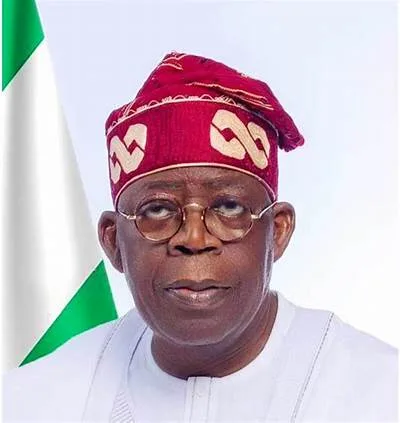
To judge a president by the results that affect ordinary people (cost of living, security, governance quality, and trust), one can argue very strongly that President Tinubu has been one of the worst presidents Nigeria has had in recent times. Below, I will highlight 10 Evaluation metrics to support this claim.
1) He launched reforms that caused a severe cost-of-living shock, without adequate cushioning.
Removing petrol subsidy and related changes may sound “economically correct,” but the speed and intensity of the hardship were tremendous.
Before anyone tells me “reforms are necessary,” my response is simple: reform without protection becomes punishment.
2) Inflation became a headline tragedy for households
When inflation climbed as high as 34.19% in June 2024, it wasn’t just statistics. Instead, it was hunger, rent pressure, and families cutting meals. Even now that inflation has slowed down, the question is: how many lives were broken before the policy benefits arrived?
3) The naira and Forex environment punished businesses and salaries
Forex fluctuations and naira volatility resulted in higher prices for imported inputs, increased operating costs for SMEs, and reduced real wages. His supporters will say, “It’s a needed adjustment,” but I keep asking: Why was the transition managed so shakily that citizens had to bear the cost?
4) Minimum wage increase exposed how badly wages fell behind reality
Yes, the minimum wage moved from ₦30,000 to ₦70,000 (signed July 29, 2024). However, that moment itself proves the pressure Nigerians were under. A wage hike is not a victory if inflation and prices have already run far ahead; it can still feel like a late patch on a deep wound.
5) Social protection felt too slow or too small for the scale of suffering
Government palliatives and support programs existed on paper, but many people experienced them as inconsistent, delayed, or insufficient.
In leadership, perception matters: when people feel abandoned, trust collapses.
6) The Nigerian Electricity became “pay more, suffer the same.”
The Band A tariff jump in April 2024 is a significant example: higher costs without a fast, visible improvement in reliability for many citizens.
And even the government’s own narrative admits the sector still struggles with grid problems and limited generation, so why should citizens accept higher bills as “progress”?
7) Food insecurity worsened to alarming projections.
If tens of millions are projected to face severe food insecurity, including projections of over 33 million in 2025, that constitutes a governance failure. Full stop. You can blame climate and global factors, but a serious government reduces shocks by protecting farming, transport, and purchasing power. How has Tinubu handled this?
cool Insecurity remained a defining failure in the country. Kidnapping, terror attacks, fear, etc. A president’s first job is to make citizens feel safe. When mass kidnappings continue, including major school abductions, it tells investors, parents, and farmers that the state can’t protect them, and everything else suffers.
9) The handling of protests and dissent damaged legitimacy
When protesters were charged with treason after cost-of-living demonstrations, it sent a dangerous signal about civic space.
Even if the government claims it’s “maintaining order,” the burden is on the state to prove proportionality, accountability, and respect for rights. When you keep arresting peaceful protesters or harassing them with police, it clearly shows how you value human rights. Human rights under Tinubu are worse than those of the previous two governments.
10) Governance trust: Corruption, controversial policy processes, and oil-sector credibility issues
When major tax laws face public controversy about content and enforcement powers, people lose trust in the process. Especially when implementation goes ahead amid disputes. A government that manipulates tax laws passed by parliament without informing parliament and then gazettes a different law is nothing b
And when oil-sector financial decisions, such as significant debt write-offs, occur while historic remittance disputes remain unresolved, it reinforces the belief that Nigeria’s system still prioritizes protecting institutions over citizens. A government that issues contracts without following due process, as in the case of the Lagos-Calabar Highway, which was given to the President’s friend. This is a clear case of nepotism and corruption.
In conclusion, my argument is not that “Tinubu did not carry out reforms.” My argument is that the reforms were experienced as hardship without adequate protection; insecurity persisted; and trust in governance suffered. Corruption remains prevalent mainly under this government, and media propaganda
