 Premium News
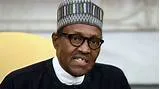
Fatima Buhari, daughter of late former President Muhammadu Buhari, has revealed that her father once believed his office in the Presidential Villa was being secretly monitored, forcing them to communicate by writing notes instead of speaking aloud.
The revelation is contained in a new book, ‘From Soldier to Statesman: The Legacy of Muhammadu Buhari’, written by Dr Charles Omole, director general of the Institute for Police and Security Policy Research (IPSPR) and presented in Abuja.
According to Fatima, there were moments when Buhari feared that conversations in his office were being listened to, prompting unusual precautions between father and daughter.
She recalled that during one quiet meeting, Buhari avoided speaking and instead made gestures, signalling that they should write their messages on paper.
“He touched his cheek, like he had a toothache, and signalled that we shouldn’t talk,” she said. “We wrote notes to each other, like spies in a film.”
Fatima said the former President believed there were listening devices in his office at the Villa and warned her to be cautious, explaining that he, too, was careful.
The book describes the experience not as drama, but as a coping mechanism in an environment where trust was strained and privacy uncertain.
More troubling, according to the account, was Buhari’s apparent resignation to the situation, despite being Commander-in-Chief.
Fatima questioned what influence those suspected of planting the devices — often referred to as “the cabal” — may have wielded over her father, especially as the alleged surveillance was said to have taken place within the highly secured Presidential Villa.
The book further notes that some security chiefs who served under Buhari later confirmed that strange objects were regularly discovered in the President’s office and bedroom during routine security sweeps, although how such items entered those restricted areas remained unclear.
Fatima described the atmosphere around the Villa as deeply unsettling, at times bordering on what she termed “diabolical.”
“We’re Africans. We know supernatural powers,” she said, declining to give details of certain incidents, adding that some matters were best left to divine judgment.
The book explains that Buhari’s personal disposition played a role in how he handled such situations. According to Fatima, age and faith had softened him, making him more reluctant to confront or publicly disgrace those close to him, even when trust was strained.
“He understands people’s histories — their parents, their families — and he doesn’t want to destroy hope,” she said.
She added that once Buhari trusted someone, it was difficult for him to withdraw that trust without overwhelming proof, preferring quiet corrections and warnings rather than sackings or public humiliation.
Fatima also disclosed that she lived in constant fear for her father’s safety, saying there were times when she believed attempts were made to harm him.
“There were attempts. Harm was done, but his time was not yet,” she said, without giving details.
As part of measures to manage perceived threats, she said Buhari sometimes publicly reprimanded her to create the impression of distance, even though he would later reach out privately to reassure her and her children.
“I cried in front of them,” she said, “but deep inside, he would call me and the kids.”
