
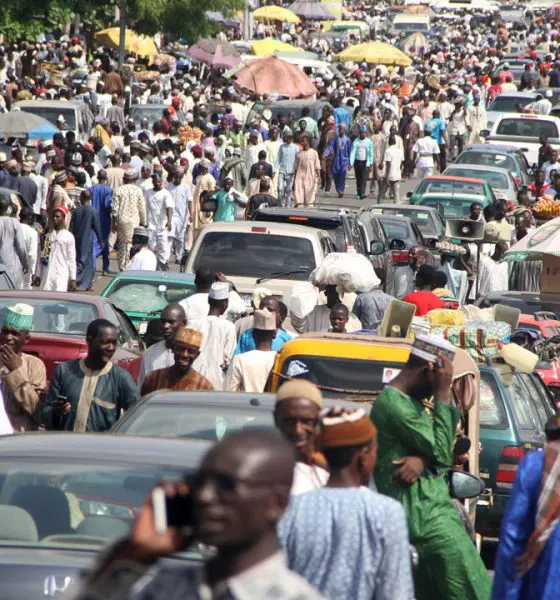
Poverty in Nigeria rose to 63 per cent in 2025, despite a slowdown in inflation, indicating the limited impact of recent macroeconomic improvements on household welfare, the World Bank has said.
The bank disclosed this in its Nigeria Development Update (April 2026) titled “Nigeria’s Tomorrow Must Start Today: The Case for Early Childhood Development,” released in Abuja on Tuesday.
Data presented in the report showed that the share of Nigerians living below the poverty line increased from 56 per cent in 2023 to 61 per cent in 2024, before peaking at 63 per cent in 2025.
The rise in the poverty rate to about 140 million Nigerians occurred even as inflation began to ease during the period, indicating a disconnect between price moderation and real income growth.
The PUNCH observed that Nigeria’s headline inflation rate declined sharply from 34.80 per cent in December 2024 to 15.15 per cent in December 2025, representing a drop of 19.65 percentage points, according to data from the National Bureau of Statistics.
Similarly, food inflation fell from about 39.84 per cent in December 2024 to 10.84 per cent in December 2025, indicating a steep decline of roughly 29 percentage points over the period.
The sharp moderation in both headline and food inflation reflects easing price pressures and base effects following the CPI rebasing, although the earlier spike had already eroded household purchasing power.
The World Bank explained that although inflation declined significantly, particularly food inflation, it remained high enough to erode purchasing power and worsen living conditions for many households.
It stated, “Household incomes have not grown fast enough to offset still-elevated inflation, and poverty has yet to begin declining.”
According to the report, the persistence of poverty reflects the cumulative impact of earlier inflation spikes, which had already weakened real incomes before the recent moderation in prices. The easing of inflation, therefore, has not been sufficient to reverse these welfare losses.
The bank further noted that global shocks, especially the Middle East conflict, contributed to rising living costs through higher energy, food, and transport prices. It said these developments are “adding pressure to inflation and poverty, including via food prices,” worsening the situation for low-income households that spend a large share of their income on basic needs.
Beyond inflation, the structure of Nigeria’s economic growth has also constrained poverty reduction. The report observed that growth has been largely driven by services and industry, while agriculture—which employs more than half of the poor—has lagged behind.
“Growth in the agriculture sector—where more than half of the poor work—has lagged services and industry, constraining the pace of poverty reduction,” the World Bank stated.
This imbalance, it is explained, has limited income gains among the most vulnerable segments of the population, thereby slowing the pace at which economic growth translates into improved living standards.
Despite the increase in poverty in 2025, the report projected a gradual decline beginning from 2026 as inflation continues to ease and macroeconomic conditions stabilise. It stated, “Despite elevated poverty levels, a gradual decline is expected from 2026 as inflation continues to ease.”
The World Bank added that poverty, measured against the national poverty line, is expected to fall slightly in the near term and could decline to about 59 per cent by 2028, largely driven by lower food inflation and moderate economic growth.




Leave a Reply