
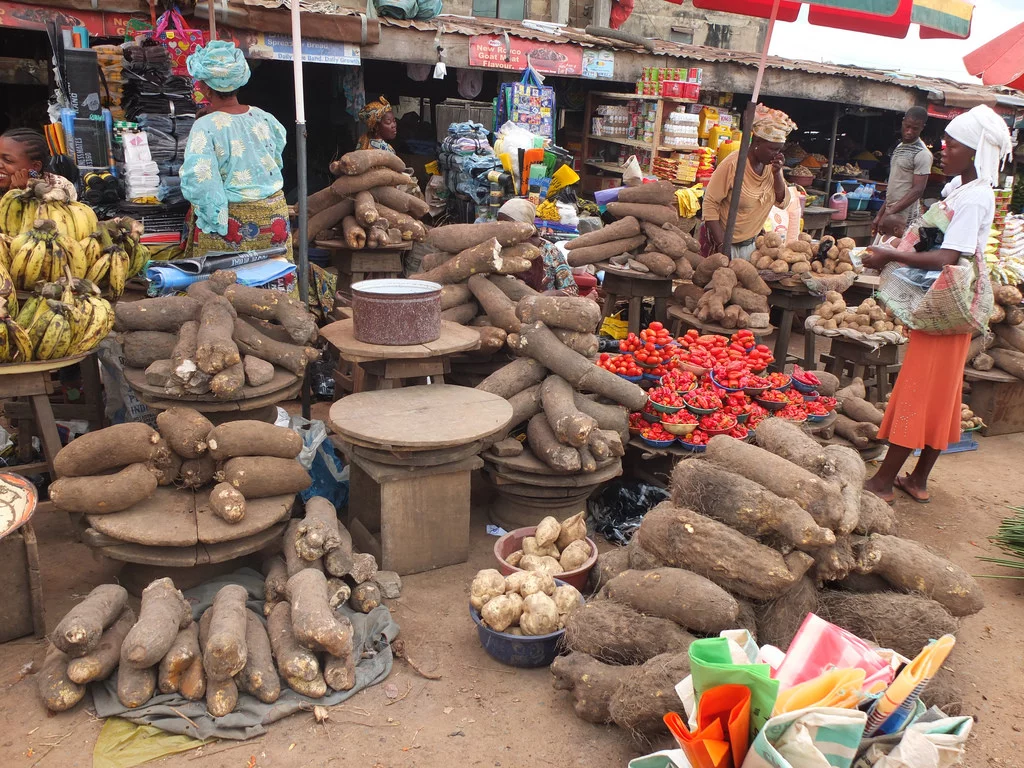
Nigerians would have to grapple with a worsening cost of living as food inflation climbed alongside skyrocketing fuel and energy prices.
This comes at a time President Bola Ahmed Tinubu visits the United Kingdom on the invitation of King Charles III on Tuesday.
Nigeria’s National Bureau of Statistics Consumer Price Index and Inflation data released on Monday showed that the country’s food inflation rose to 12.12 percent in February 2026, up from 8.89 percent in the previous month.
NBS attributed the month-on-month rise in food inflation to increases in the average prices of beans, carrots, okazi leaf, cassava tuber, crayfish, millet flour, yam flour, snails, and avenger (ogbono/apon)—dried, unground—and cowpeas.
Meanwhile, headline inflation declined slightly by 0.04 percent to 15.06 percent in February, down from 15.10 percent in January. However, NBS’s data showed that prices increased at a faster pace on a monthly basis. The inflation rate stood at 2.01 percent in February, higher than the -2.88 percent recorded in January.
Fuel price continues to increase nationwide
February’s food inflation rise came at a time fuel prices climbed to as high as N1,330 per liter from between N875 and N900 per liter before the Iran-United States-Israel war escalation, which began on February 28th, 2026.
This comes as Dangote Refinery last week hiked its gantry petrol price for the fourth time to N1,175 per liter at the back of crude oil prices above $100 per barrel.
Dangote Refinery’s petrol hike triggered a retail fuel hike of N100 per liter by MRS filling stations and N50 by Optima Filling Stations to N1,267 and N1,270 per liter, respectively, in Abuja as of Monday.
Nigerian National Petroleum Company Limited retail outlets and other filling stations, such as Raniol, AA Rano, Empire Energy, NIPCO, and Shema dispense petrol between N1,261 and N1,330 per liter. The fuel price hike has pushed transportation fares up nationwide in the last two weeks.
Why Nigeria’s food prices rose – Economist,Teriba
Economic experts have explained the recent increase in Nigeria’s food prices in February despite a slight decline in the country’s overall inflation rate.
Speaking with DAILY POST, popular Nigerian economist and Chief Executive of Economic Associates, Ayo Teriba, said the rise in food prices in February should not come as a surprise, noting that seasonal economic activities often influence price movements early in the year.
“Well, food prices rising in February should not be much of a surprise.
“It could be, you know, a combination of seasonal factors. It could be partly seasonal. Then it could also reflect that, you know, after the holidays there are usually a lot of activities in January.
“The prices typically would moderate in January and begin to pick up as economic activity picks up in February,” he said.
Teriba explained that the uptick in food prices could reflect normal economic patterns rather than a clear sign of renewed inflationary pressure.
“So a bit of an upswing in food prices in February will come as no surprise, you know, to anyone. And before you start saying that the food prices are rising, remember that they fell in January.
He further noted that the economy often slows at the start of the year before gradually picking up momentum.
“So the economy is still asleep. So the economy begins to keep up in food by February.
“So that’s one seasonal factor. It’s not a geographic season,” he added.
Teriba also raised concerns about inconsistencies in the inflation data released by the NBS, pointing out that the agency had earlier revised previously released inflation figures.
“Well, even the fact that NBS itself had come out to say it made a mistake last year. And it, you know, reannounced all of the inflation it released throughout last year.
“The NBS is not helping its unpredictability. But again, I would say that one or two more months will establish a pattern even with the NBS factor,” he said.
According to him, the current fluctuations in food prices could either signal the beginning of another inflationary trend or merely reflect short-term volatility.
“So right now let’s just note that food prices are showing volatility after two and a half years.


Leave a Reply