
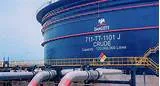
Just when President Bola Tinubu and Olayemi Cardoso, governor of the Central Bank of Nigeria, thought they were catching a break with the improving economy, events from 8,500 kilometres have thrown spanners into the wheel of progress. The president and his economic team have four main options, which of these options are best? Let’s find out.
For context, just last week, the National Bureau of Statistics released the GDP report, showing that the Nigerian economy grew by 4.07% in Q4 2025, beating previous expectations. A few days earlier, the CBN had announced that the country’s foreign reserves hit a 13-year high at $50.4bn. Inflation was also recorded to have fallen to 15.1%, inching closer to the goal set by CBN for 2026.
All seemed to be going on well. Food inflation fell to single digit, the lowest since the Goodluck Jonathan era.
It all felt like the country could start to breathe easy again, at least gradually, then the US and Israel launched an attack on Iran, a consequential oil producer and potential nuclear power. The escalations that followed led to the blockage of the Strait of Hormuz, the path responsible for 20% of global crude oil supply. This has then led to higher oil prices and higher petrol prices as a consequence.
What does this mean?
In Nigeria, everything rises and falls to petrol prices. Even governments get kicked out if petrol prices are not well managed. Once petrol prices are up, transportation cost rises, power generation cost climbs, food prices follow and inflation gets out of hand. All of these begin to bite into the pocket of the Nigerian people.
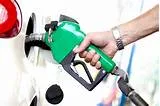
As of March 10, 2026, petrol pump price is expected to be above N1,200 per litre in Lagos and about N1,300 elsewhere around the country. That is effectively double what it was on new year’s day. Imagine the consequences of that on the prices of everything. To halt the wicked consequences, the president and his team need to act fast — but what are the options before them?
The options before Tinubu
I. Temporary Subsidy:
Fuel subsidy is gone and the oil and gas industry in Nigeria has been deregulated, hence, the price fluctuation. Those who enjoyed subsidy, including the Nigerian masses miss it a lot. However, bringing back subsidy is economically dangerous, given its history of corruption. Beyond the corruption, returning subsidy threatens Tinubu’s reputation and the president who will see reforms through.
This may immediately cause investors to start voting their money out of Nigeria, deeming this as policy somersault. But there is no denying it, temporary subsidy to cover the cost of the current increase until the war in Iran is done will be a quick and almost immediate fix.
With Nigeria’s average daily crude consumption of 60.2 million litres per day, to keep petrol prices at N874 per litre, the government will have to pay as much as N544 billion every month. If we do that for two to three months, we will be crossing a trillion naira, while potentially opening other cans of economic worms. Tricky business.
II. Eliminating Regulatory Costs
During a press conference on Monday, David Bird, Dangote Refinery MD, said the refinery deals with 47 government agencies and incurs costs from them, which potentially adds to the final price of petrol.
NNPC admitted some of this when it released multiple templates in 2024, which showed NMDPRA levy and the Midstream and Gas Infrastructure Fund (MDGIF) are part of what make up our petrol prices. I believe removing the NIMASA, NPA, NMDPRA, MDGIF costs and many others alike will reduce petrol price in some measure.
This will definitely not be as much as Nigerians want, but it will be a start, and a signal that the Nigerian government is putting the wellbeing of its citizens first. This will even help long term, bolstering local refining as a viable industry.
III. Enhanced naira-for-crude deal
Today, Dangote Refinery does not get all its crude oil from Nigeria. As repeated on Monday, the company gets less than 40% of its crude from the naira-for-crude deal. The rest of the crude refined by Dangote are from the United States and some other parts of the world.
Even more fascinating, the refinery leadership say they import Nigeria’s own crude from elsewhere. In English, Nigeria sells to foreigners, those foreigners then add their cut and sell to Dangote Refinery. This cost is ultimately passed back to the average Nigerian, who has to pay for that extra cost.
So what if Nigeria sweetens the naira-for-crude deal, and sell more oil to Dangote at a price that shaves some FX and import cost to get the prices to go lower? I am aware enough to know that Nigeria has immense oil commitments to foreign lenders and this will not be as straight forward as I make it sound, but for the sake of Nigerians and the Nigerian economy, more can be done.
IV. Safety Nets
Nigeria has a relatively poor record of handling safety nets. The monies often do not achieve intended purposes and government loses a lot of money to politicians in the process.
If by some economic discipline, we can pull off a targeted safety net system that ensures the rising cost of petrol does not hit the poorest and the most vulnerable in our country, then the government will have recorded a massive win. This is an option, but execution is tricky given the country’s history.
Which one works for your wallet?
In the short term, the obvious win for your wallet is temporary subsidy. It keeps the prices below N1,000 per litre for all Nigerians, and ensures that the government takes the hit for the rising cost. It may also succeed in managing inflation. However, if not well-managed, it may be the beginning of new economic troubles.
None of these options is perfect, and that is precisely the point. The best path forward is likely a combination, eliminate regulatory costs immediately, while quietly sweetening the naira-for-crude deal for medium-term relief. Temporary subsidy should remain the last resort. Whatever Tinubu decides, Nigerians will feel it in their fuel tanks, their food bills, and ultimately their wallets.

Leave a Reply