
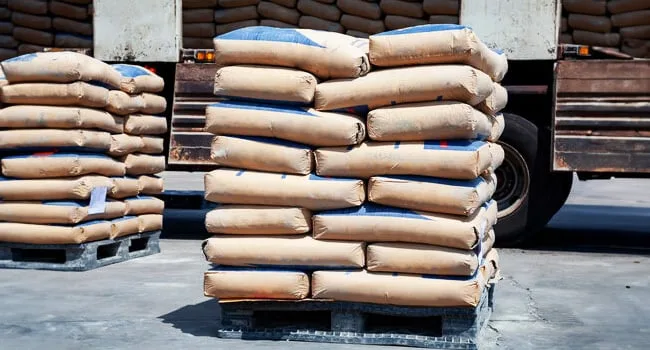
The escalating increase in the prices of cement has sent shockwaves to operators in the housing/construction sector, leading to delays and abandonment of projects.
•Cement price increases by 30%, steel 20%, sharp sand 25%
•Developers call for stakeholders’ engagement
Depending on the location, a 50- kilogramme(kg) bag of cement, which cost N7,500 in the last quarter of 2025, is now goes for between N11,500 and N15,000 in the market.
This development is coming at a time cement manufacturers recorded a combined profit of N1.64 trillion for the 2025 financial year.
Decrying the situation, real estate developers called the government to prevail over excessive increase in the prices of cement and other critical building materials
They pointed out that cement prices rose by over 30 percent in the past quarter, while steel prices shot up 20 per cent, and sharp sand prices jumped by 25 percent, adding that wood and granite prices have also increased, albeit at a slower pace.
The hikes, they noted, were driven by global market trends, logistics challenges, and local demand, adding that they have been facing serious financial pressures.
They warned against the implications on ongoing and future housing projects.
In what they described as “a troubling increase in the prices of essential building materials” the President of the Real Estate Developers Association of Nigeria (REDAN), Oba Akintoye Adeoye and Director, Centre for Housing and Environmental Sustainability, University of Lagos, Professor Olugbega Nubi, called on the Federal Ministry of Housing and Urban Development and other relevant government institutions to urgently engage stakeholders in the building materials value chain with the aim of stabilizing the prices of cement and other essential construction materials.
“We also appeal to cement manufacturers and other industry players to work collaboratively with government and stakeholders in order to ensure that the housing sector remains stable and capable of delivering affordable homes to Nigerians,” the duo said.
According to Oba Adeoye, escalating cement prices threatened affordable housing delivery, adding that the situation has become worrisome, considering the fact that Nigeria is already confronted with a significant housing deficit.
Out that from the available data and market observations, he said that the price of a 50kg bag of cement, which sold for about N7,500 in the last quarter of 2025, rose to between N9,000 and N10,000 at the beginning of 2026.
Unfortunately, he said the price has continued to climb and is now selling between N11,500 and N15,000 in several parts of the country.
The sharp increase within such a short period, Oba Adeoye said has placed enormous pressure on developers and investors in the housing sector.
“Cement remains one of the most critical inputs in construction, accounting for a significant proportion of the overall cost of building houses. When the price of cement rises, the entire cost structure of housing development is affected,” he said.
In addition to cement, he noted that the cost of other construction inputs, such as iron rods and sand has also increased considerably.
“The combined effect of these rising costs is that developers are now facing serious financial pressures, which are already leading to delays in project delivery, scaling down of housing developments, and in some cases the suspension or abandonment of projects.
“This situation is particularly worrisome when we consider the fact that Nigeria is already confronted with a significant housing deficit.
“Any development that further increases the cost of building houses will ultimately make homeownership even more difficult for millions of Nigerians,” REDAN president said.
Professor Nubi pointed out that building and construction sector is a vital component of Nigeria’s economy, contributing significantly to GDP growth and employment.
“Last year, it surpassed the oil sector for the first time, marking a major milestone. This growth is crucial as we navigate global uncertainties. We cannot afford to lose this momentum,” he said.
The recent surge in cement prices, he said has sent shockwaves through Nigeria’s construction sector, pointing out that as a key input, cement’s price increase has far-reaching implications for construction costs, projects and stakeholders.
“But cement isn’t the only material affected, steel, wood, granite, and sharp sand have also seen significant price increases, exacerbating the challenge.,” he said.
He warned against persistent increases in the cost of building materials , saying it could create unintended consequences within the construction industry.
Nubi reeled out the impact of higher material costs to include escalated project costs, potentially leading to project delays or cancellations; deepen housing affordability crisis as cost burden is passed to consumers.
“Contractors face squeezed margins, potentially affecting quality and timelines.
The impact is evident in housing and rent brices across major cities, “ Nubi said
When costs rise beyond manageable levels, REDAN president said there is always the risk that some individuals may resort to the use of substandard materials in an attempt to cut costs, which can ultimately compromise the quality and safety of buildings.
“We felt it necessary to address the nation on a matter that is rapidly becoming a major challenge to housing delivery and infrastructure development in Nigeria — the escalating cost of cement and other critical building materials.
“Over the past few months, the real estate and construction sectors have witnessed a troubling increase in the prices of essential building materials, particularly cement. As stakeholders who are directly involved in housing development across the country, our members are increasingly concerned about the implications of this development on ongoing and future housing projects,” REDAN president said.
“At REDAN, we remain fully committed to supporting government initiatives aimed at addressing the housing deficit and expanding access to decent and affordable housing across the country. However, achieving this objective will require a stable and predictable environment, particularly in the pricing of critical building materials like cement and iron rods.
“We believe that through constructive dialogue, policy support, and cooperation among stakeholders, practical solutions can be found to address this challenge and safeguard the future of housing development in Nigeria,” the REDAN boss said




Leave a Reply