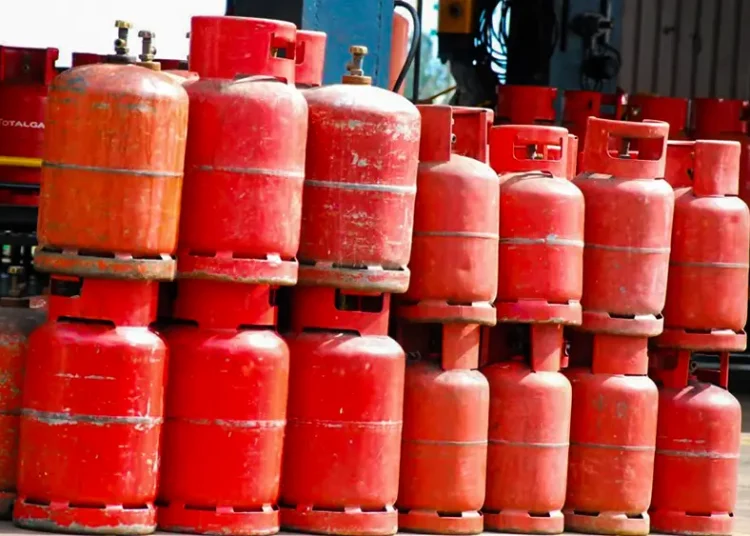
Residents across Nigerian cities are grappling with sharp increases in cooking gas prices, and the impact of the hike in Premium Motor Spirit (PMS) pump prices continues to ripple through household budgets and supply chains.
The surge in cooking gas prices in Nigeria is being linked to the ongoing US–Israel–Iran conflict, which has disrupted global oil and gas markets and pushed up benchmark prices that feed into local LPG costs
Residents of Lagos communities are grappling with fresh increases in cooking gas prices, as the ripple effects of the recent PMS (petrol) hike continue to impact household budgets.
Findings by LEADERSHIP around Onike, Iwaya and Yaba on Wednesday revealed that one kilogramme of Liquefied Petroleum Gas (LPG) now sells between N1,250 and N1,300, depending on the retailer, from about N900 per litre, last week
The price of a 5kg cylinder ranges from N7, 500 to N8,167, while 12.5kg refills cost between N13,750 and N19,200 along Iwaya and Onike.
However, the sharp price fluctuations, even over a short period, have left many residents confused and frustrated, with some accusing retailers of exploiting the situation created by the recent petrol price hike.
A resident of the Berger area of Lagos, who identified herself simply as Amaka said the rising cost of both petrol and cooking gas has worsened the cost-of-living crisis.
“Everything is going up at the same time. Transport fares have increased due to petrol, and cooking gas is also high. We don’t even know which one to complain about first,” she lamented.
She added that she was shocked to be quoted N19,200 for a 12.5kg refill at a neighbourhood outlet. “Last time I refilled, it was far less than this. How did we get to almost N20,000? It is becoming difficult for an average family to cope,” she said.
Retailers who spoke to our correspondent attributed the increase to higher transportation costs following the PMS hike and to supply chain pressures.
While one dealer explained that distributors now charge more to move products from depots to retail points.
“Some of those stations that we get the gas have jacked up there prices. When petrol goes up, everything goes up. We use vehicles to transport the gas cylinders. The cost is transferred to us, and we have no choice but to adjust,” he said.
In Wawa, a border community along the Lagos-Ibadan Expressway, residents shared similar concerns.
Mama Chisom, mother of three, said she has begun rationing gas usage to make ends meet. “With what’s going on now, we are managing it carefully. I tell my children not to waste gas. Sometimes, I cook once and warm the food later to save cost,” she said.
She added that the combined effect of high transport fares and rising food prices has placed additional strain on families in border communities. “We depend on the city for many things. If fuel prices increase, transport costs increase, and now gas prices are high too. It is too much for us,” she said.
In Abuja, LEADERSHIP checks also showed that cooking gas prices spiked up yesterday amid the US-Israel/Iran conflict’s oil market volatility.
A 12.5kg cylinder now costs between N17,000 to N19,500 in areas like Garki and Wuse, up 25 per cent from last week, per market surveys. Vendors linked it to imported LPG cost surges—exacerbated by war-driven shipping delays and Brent crude jumps—plus local trucking expenses from the PMS hike. Civil servant Ibrahim Musa lamented: “Fuel scarcity fears from the war are hitting us here. Gas was our affordable alternative; now it’s pricier than kerosene.”
In the gas-rich Niger Delta, Port Harcourt residents faced the steepest climbs. Refills for 12.5kg cylinders ranged from N18,500 to N21,000 in Diobu and Trans-Amadi, as local production failed to offset global LNG disruptions caused by Iranian threats. Dealers say PMS hikes doubled delivery costs from riverside plants.Trader Ebere Okoro said: “Ironically, in the gas capital, we’re worst off. The Middle East war blocks cheap imports, and petrol woes inflate everything.”

Leave a Reply