
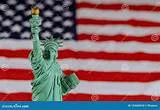
The United States has introduced fresh partial travel restrictions affecting Nigeria and several other countries, triggering debate over the implications for Nigerians seeking student, marriage, tourist, work, and immigrant visas.
The policy was announced in a White House fact sheet titled “President Donald J. Trump Restricts and Limits the Entry of Foreign Nationals to Protect the Security of the United States” and was signed into effect by President Donald Trump on December 16, 2025.
Invoking Section 212(f) of the US Immigration and Nationality Act, the proclamation expands entry restrictions on nationals of countries assessed as having inadequate screening and information-sharing systems. Nigeria is among 15 countries newly placed under the policy, a move that has raised diplomatic, economic, and humanitarian concerns.
Unlike a full travel ban, the measure imposes partial visa restrictions. This means that certain visa categories are either suspended or subjected to heightened scrutiny, including additional vetting and longer processing times.
According to the White House, the policy is intended to protect US national security by ensuring proper screening of foreign nationals. The administration said Nigeria and some other affected countries have not met benchmarks related to identity verification, reporting of lost or stolen passports, and sharing of security-related information.
In effect, the US is signalling that restrictions will remain in place until it is satisfied with the robustness of these systems.
Impact on Nigerian visa applicants
For many Nigerians, the new policy is expected to result in tougher background checks, longer waiting periods, and a higher risk of visa refusal, particularly for immigration and employment-related visas.
Nigeria has been classified under “partial suspension,” meaning several important visa categories are either restricted or temporarily halted.
Immigrant visas: Nigerians seeking permanent residence in the US are currently barred from obtaining immigrant visas. However, marriage-related immigrant visas such as CR-1, IR-1, and K-1 were not listed among the suspended categories.
Non-immigrant visas: Restrictions affect major visa classes, including:
B-1/B-2 (business and tourism): Travel for tourism, family visits, or short-term business is suspended or limited.
F and M visas (students and vocational training): New student admissions are temporarily suspended.
J visas (exchange programmes): Academic and cultural exchange programmes are halted.
Applicants may also be required to submit additional documentation, including biometric information, proof of residence, and evidence of strong ties to Nigeria, to demonstrate that they do not pose immigration or security risks.
While holders of valid US visas are largely unaffected, future renewals may still be subject to stricter scrutiny.
Immigration experts say students and professionals are likely to be the most affected. The US remains a major destination for Nigerian students, with more than 17,000 Nigerians currently enrolled in American institutions.
Diplomatic and economic implications
Diplomatically, the restrictions place pressure on Nigeria to address US concerns over data sharing and security cooperation. Analysts say improved collaboration with American security and intelligence agencies could be key to easing the restrictions.
Economically, the policy may have longer-term consequences. Nigerians in the diaspora contribute billions of dollars in remittances annually, and limits on new migration could eventually affect these inflows and related economic ties.
Seek guidance from qualified immigration lawyers or consultants.
Students and skilled workers may also consider alternative destinations such as Canada, the United Kingdom, or Australia, where immigration pathways are currently more predictable, though the US remains accessible to applicants who meet the new requirements.
Overall, Nigeria’s inclusion on the restricted list highlights broader issues around identity management, border control, and international data coordination. Many observers believe the development should prompt renewed efforts to modernise Nigeria’s civil documentation systems and strengthen diplomatic engagement.
As of the time of filing this report, neither the Ministry of Foreign Affairs nor the Nigeria Immigration Service had issued an official response to the policy.


Leave a Reply